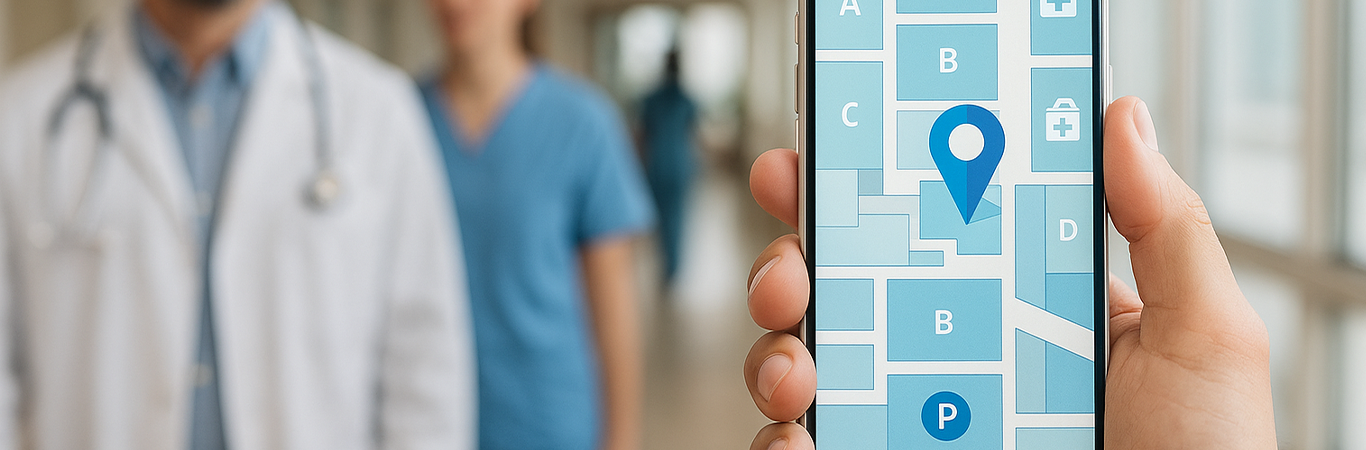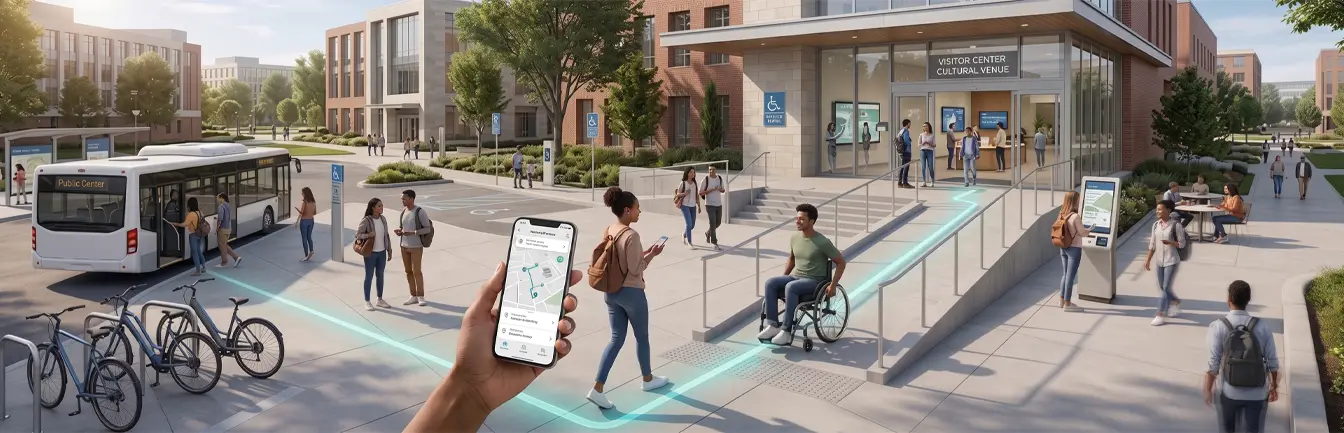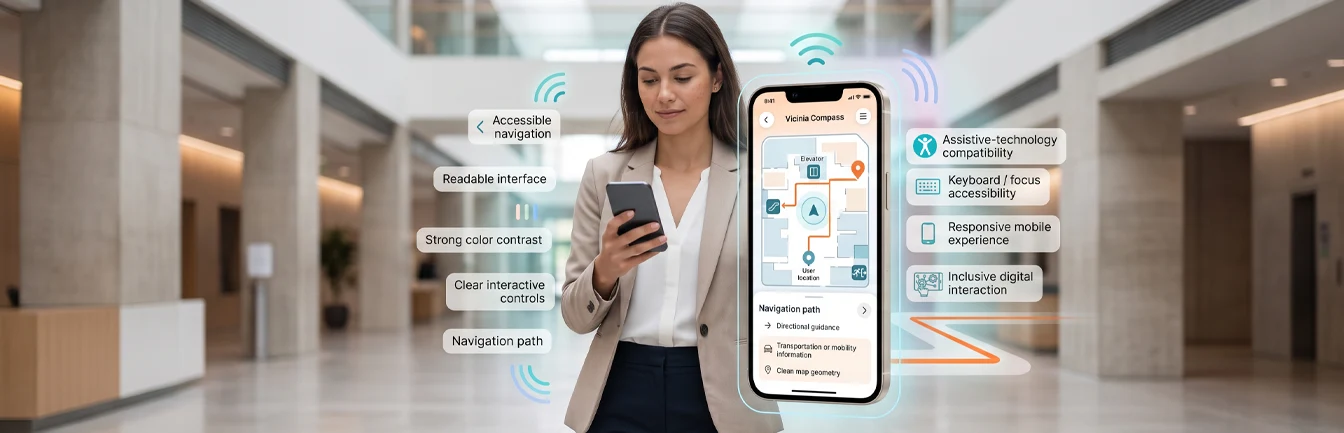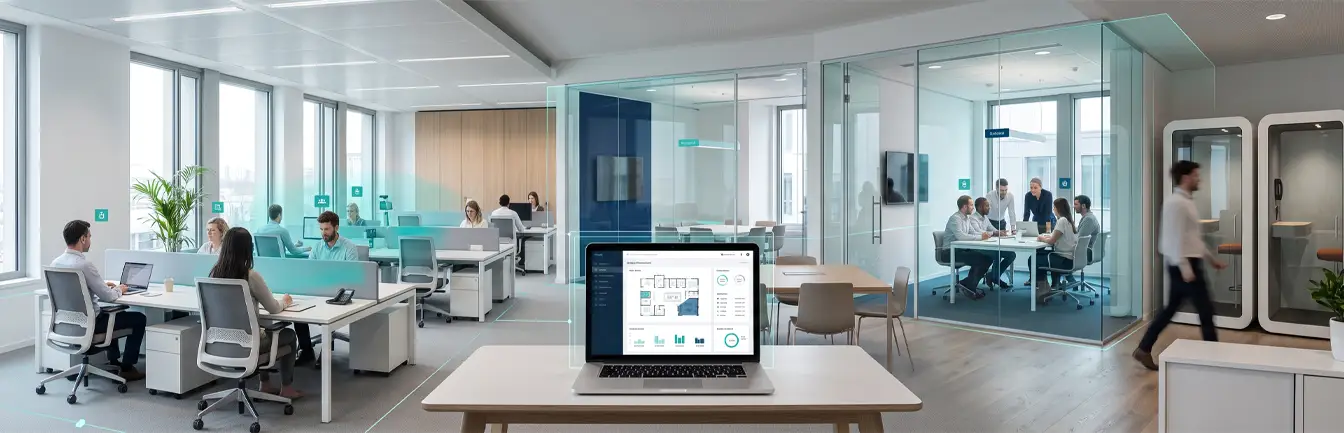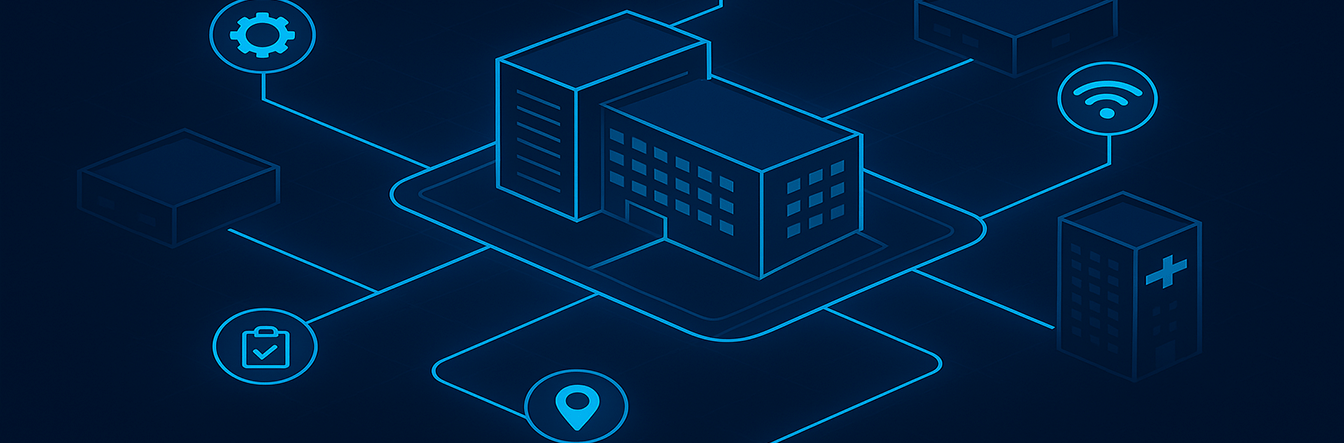

A hospital can be a towering building or a massive complex consisting of many interconnected buildings. Its sheer size is usually due to the vital need to provide as many specialized health services as possible in a single, centralized location. Because these environments are inherently complex and stressful, implementing modern healthcare wayfinding solutions and intuitive indoor mapping can significantly help improve a hospital’s daily navigation.
As healthcare facilities continue to expand and modernize, relying on static signage is no longer enough to guide patients, visitors, and staff efficiently. Facility managers and hospital IT directors are increasingly turning to digital twin technology to create a more responsive and patient-centric environment. Let’s explore exactly how these advanced systems are transforming modern healthcare infrastructure.
Key Benefits of Healthcare Wayfinding Solutions
Monitoring Movements and Preventing Unauthorized Exits
Hospitals house vulnerable patients who require constant, vigilant monitoring. They can be young children, high-risk patients, or individuals whose mental state makes wandering dangerous. These patients may not be fully aware of their surroundings and can easily wander off if not properly supervised.
Keeping a manual eye on every single patient isn’t practical or sustainable for large, busy hospitals. A robust healthcare wayfinding solution can make tracking them significantly easier and more efficient. Modern digital mapping systems possess third-party integration capabilities that can link seamlessly with mobile networks or IoT devices. For example, a simple electronic wrist tag can actively track vulnerable patients and instantly inform hospital security if they wander off designated safe zones.
Making Hospital Navigation Easier and Stress-Free
Navigating a massive, labyrinthine hospital can be incredibly tiresome and often fills people with unnecessary anxiety. Hospitals are also places that most people find naturally uncomfortable and emotionally charged. So, the simple act of trying to find a specific department or ward can become a heavy, overwhelming task for many.
A well-designed healthcare wayfinding solution can drastically reduce that friction. Interactive indoor mapping makes it easier for users to locate a specific patient room, a specialized doctor’s office, or an essential service like the pharmacy. These intuitive features are readily available from their personal mobile device or a physical, interactive lobby kiosk. Users can take charge of their own experience and access more detailed information through helpful audio instructions, video guides, or clear text directions.
Improving Critical Communication
Waiting is undeniably one of the most common—and stressful—experiences in a hospital. Waiting for lab test results, complex medical diagnoses, post-operation news, or scheduling information is a daily reality. Typically, patients feel like they need to maintain physical proximity to the front desk to receive these services. Endlessly waiting in the hospital corridors creates unnecessary pressure on administrative staff and increases anxiety for the patients, frustrating both parties.
The advanced indoor mapping platform from Vicinia includes robust, built-in communication features. The hospital administration can instantly alert all users, specific patient groups, or individual users directly through the app. According to recent studies on health information technology, improving real-time communication is critical for enhancing overall patient satisfaction. Furthermore, users can also communicate directly on the platform, seamlessly requesting information or scheduling follow-up appointments without waiting in line.
Delivering Better, Accurate Facilities Management
A hospital is fundamentally a place of healing. It is constantly busy with patients in critical condition and a rotating staff of medical professionals. Sadly, due to its nature, it is also highly likely to experience sudden emergencies. Therefore, it is absolutely critical that both staff and visitors are acutely aware of key information, the location of life-saving equipment, and essential services at a moment’s notice.
During a crisis, an advanced healthcare wayfinding solution can instantly highlight all the available, safe pathways and emergency exits directly on users’ phones. It can also dynamically list the real-time locations and availability of critical medical equipment, such as automated external defibrillators (AEDs) or crash carts. This makes it significantly easier and faster for medical staff to find their way to vital equipment when every second counts.
Transform Your Hospital Operations Today
Advanced indoor mapping fundamentally improves the overall hospital experience for both anxious patients and overworked staff. It actively lessens the frustrating friction points of hospital navigation and drastically enhances operational efficiency across the entire campus.
If you are a hospital administrator or IT director looking to modernize your facility and improve patient care, contact Vicinia now to book a demo and learn more about our comprehensive healthcare wayfinding solutions.