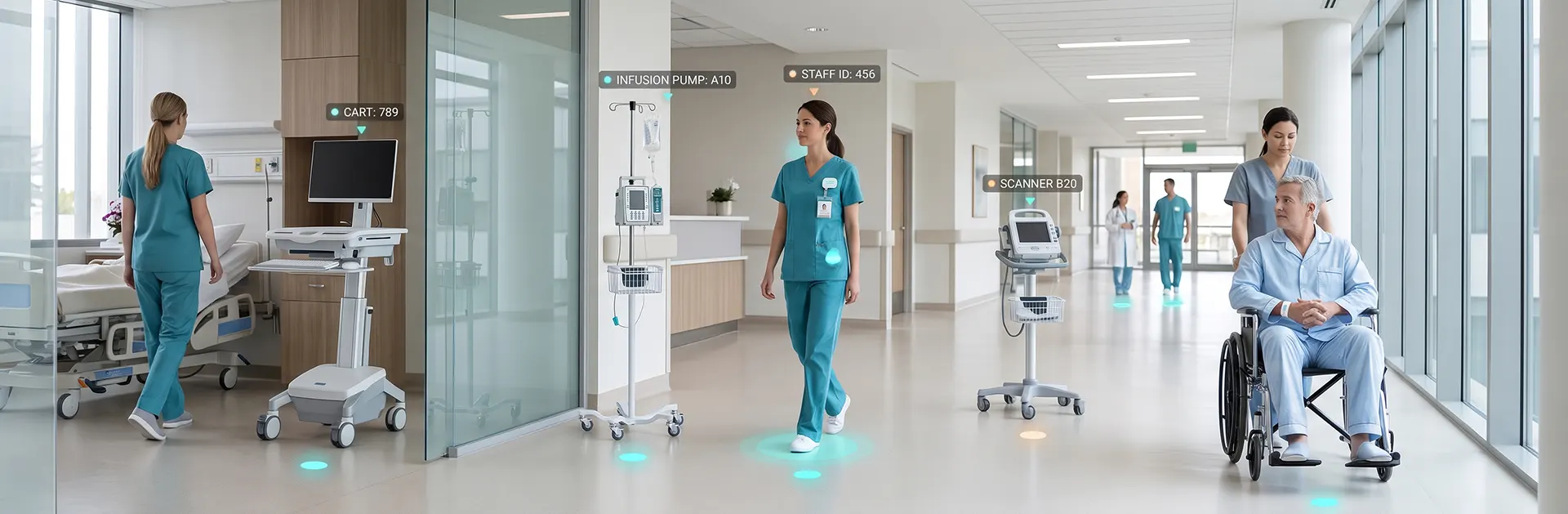
Patient tracking bracelets, RTLS badges, and medical equipment tags support visibility into people, equipment, and operational resources.

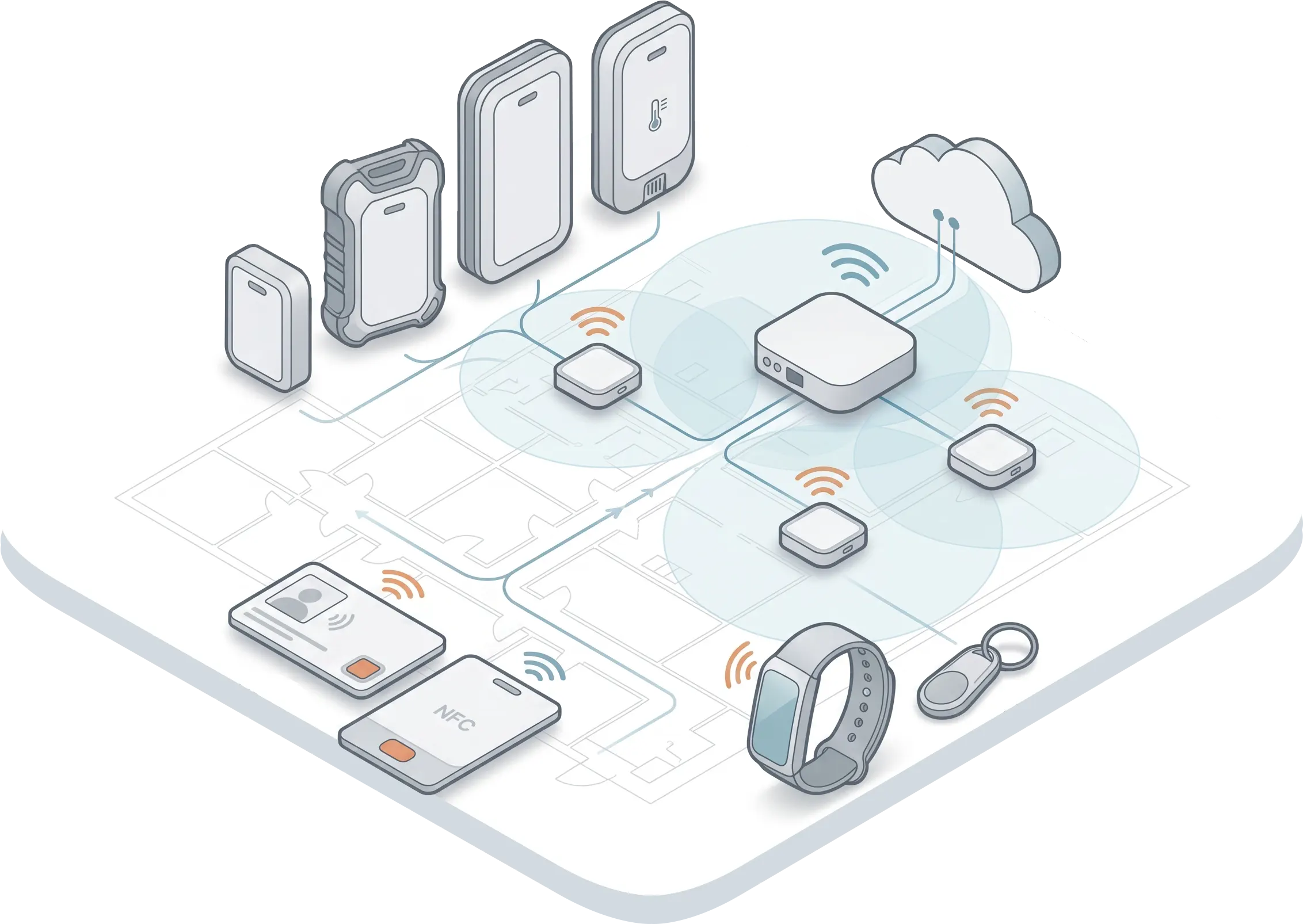
Vicinia Asset Tracking Hardware combines tracking devices and RTLS infrastructure to deliver scalable real-time visibility for assets, equipment, inventory, and people. Integrated with the Vicinia IIoT Platform and Digital Twin ecosystem, the hardware layer captures location and sensor data while enabling asset tracking, asset visibility, asset utilization, theft protection, compliance monitoring, and operational intelligence.








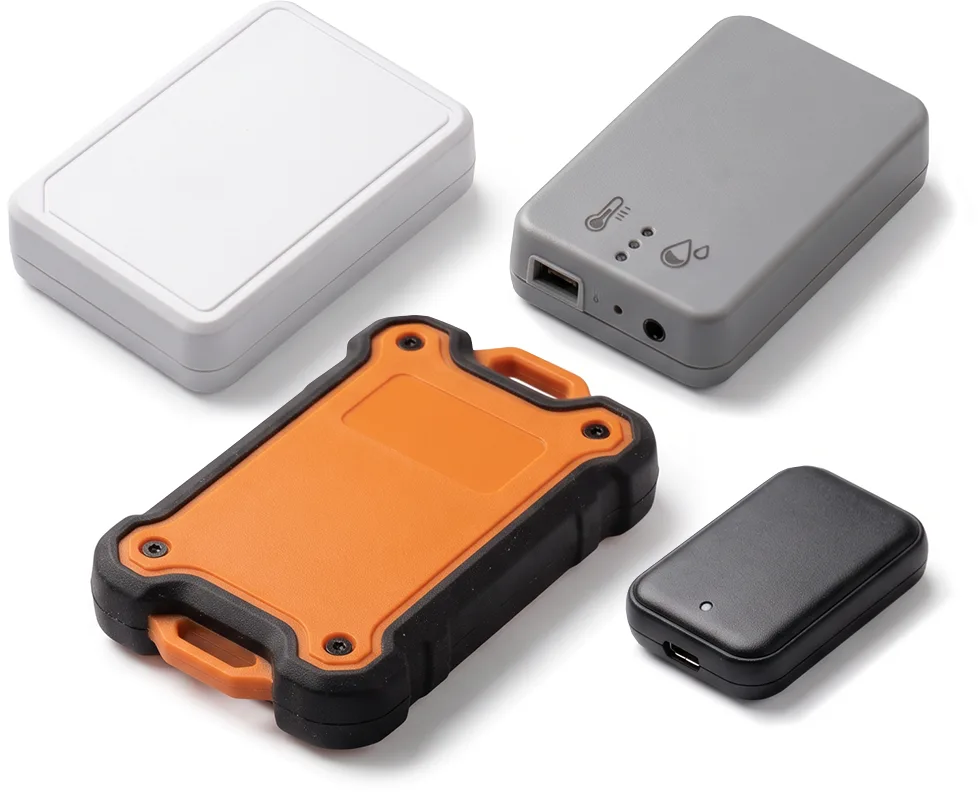
Vicinia BLE Asset Tags are available in multiple form factors, battery capacities, environmental ratings, and sensor configurations. Organizations deploy asset tags, asset tracking tags, and RTLS tags across equipment, inventory, tools, and mobile resources to support real-time visibility, inventory management, asset protection, anti-theft monitoring, and operational workflows. Select models support environmental monitoring, including temperature and humidity sensing.
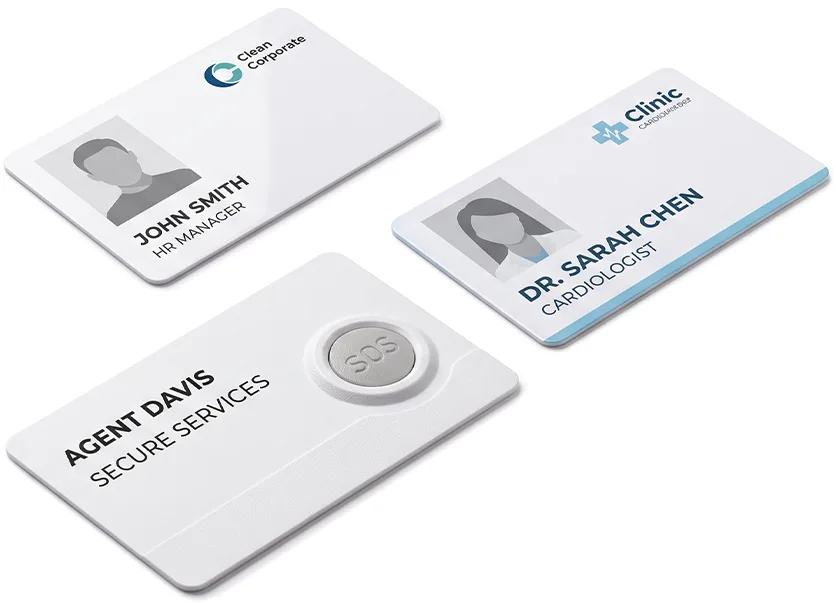
Vicinia Smart Personnel Cards combine BLE location intelligence with NFC-based identification and access control capabilities. Organizations use these cards to improve workforce visibility, emergency accountability, regulatory compliance, security operations, and personnel coordination. Certain configurations incorporate duress badge functionality, enabling personnel to request assistance while sharing real-time location information.
Vicinia Smart Wristbands and Keyrings provide wearable RTLS tracking for individuals operating within complex indoor environments. Available in multiple configurations, these wearable tracking devices support real-time visibility, safety monitoring, visitor management, operational workflows, and compliance-driven applications while offering long battery life and durable operation.
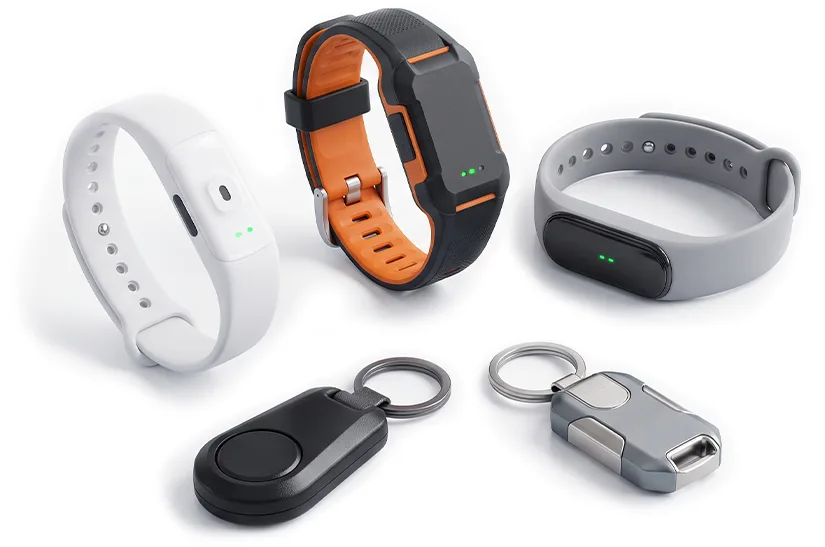
Asset tags, personnel cards, wearable tracking devices, and RTLS tags are available in a variety of form factors, battery capacities, environmental ratings, mounting options, and sensing configurations. Our team helps identify the optimal devices for your environment, operational processes, and asset tracking requirements.
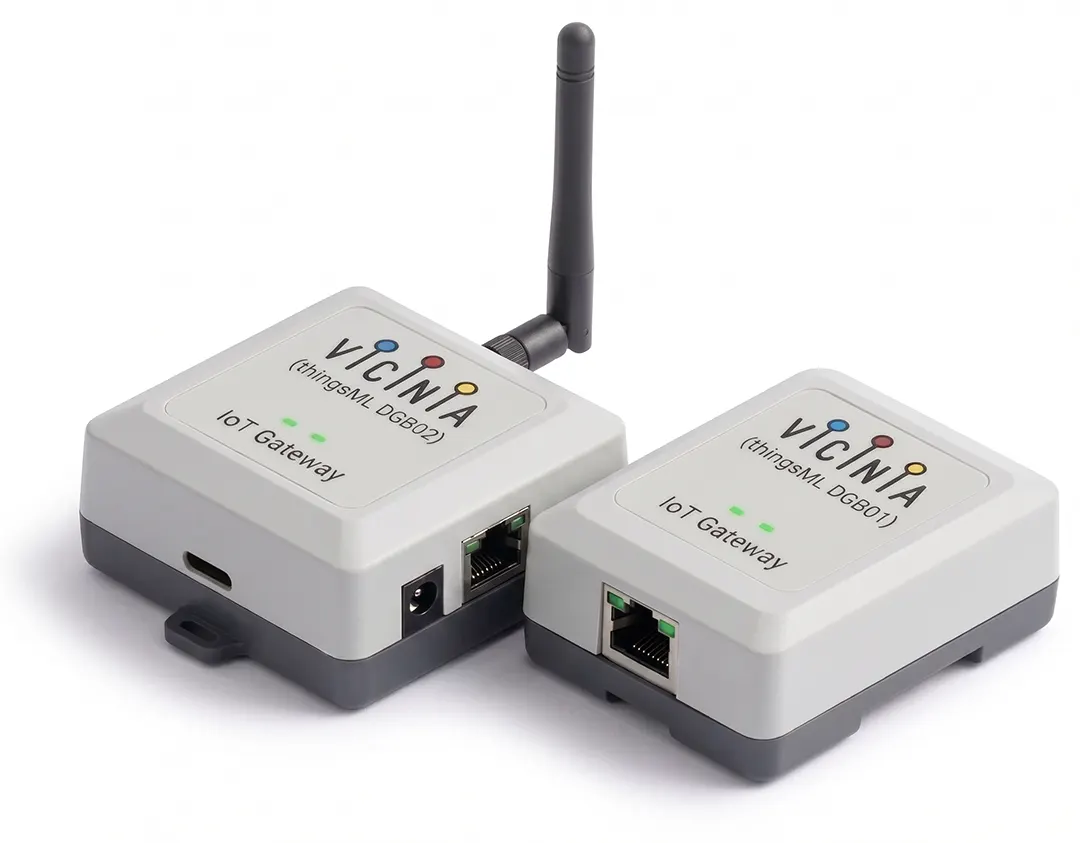
Vicinia IoT Gateways collect data from asset tags, wearable tracking devices, personnel badges, and sensors before securely transmitting information to the Vicinia IIoT Platform. Acting as the aggregation point for RTLS infrastructure, gateways provide real-time data collection, cloud connectivity, local buffering, resilience against network outages, and support for Digital Twin applications. Supported capabilities include BLE-to-Wi-Fi communication, edge processing, and real-time location services.
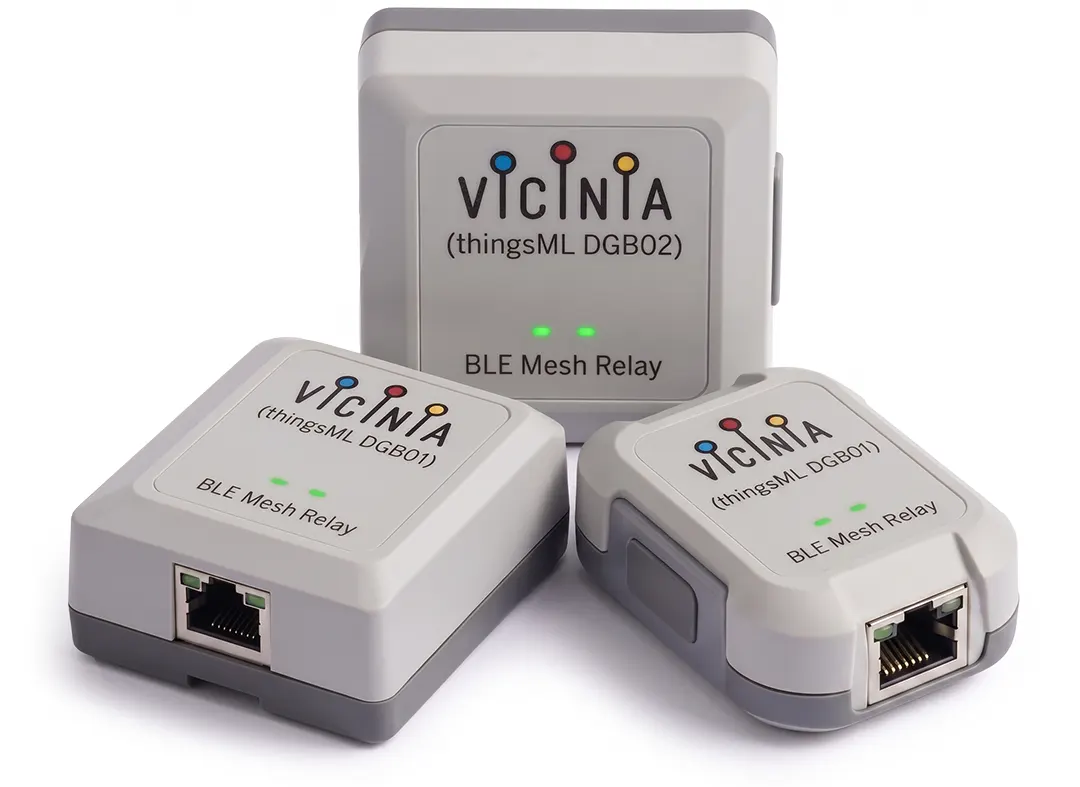
Vicinia BLE Mesh Relays extend RTLS coverage by creating a self-healing Bluetooth mesh network. Acting as wireless relays within the RTLS infrastructure, these devices transport tracking information from tags and wearables to IoT Gateways while automatically optimizing communication paths. This architecture improves scalability, reduces infrastructure costs, increases coverage, and supports deployment across large campuses, hospitals, airports, manufacturing facilities, and enterprise environments.
Asset tracking deployments can be tailored to facility size, operational requirements, and RTLS coverage objectives.
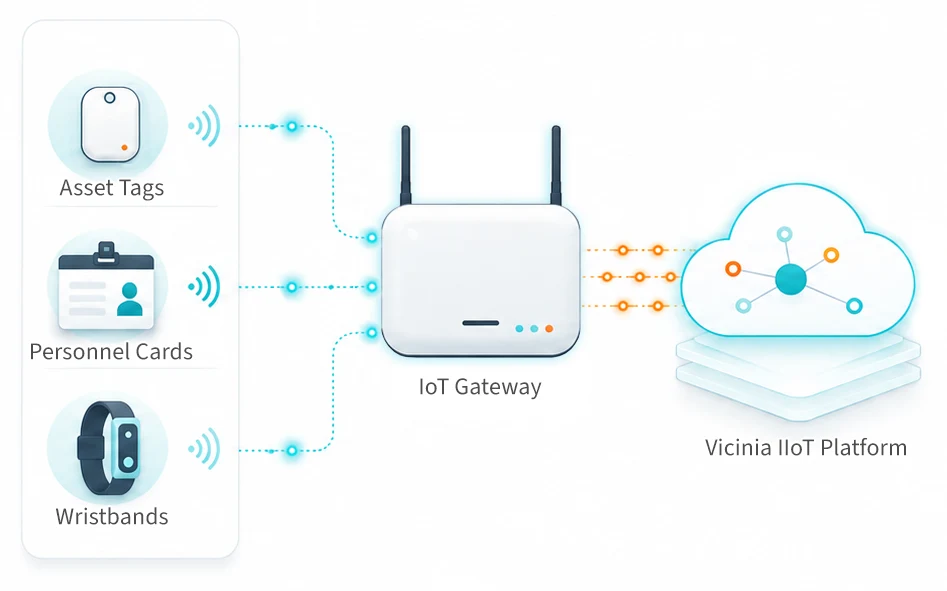
Asset tags, personnel cards, wearable tracking devices, and RTLS tags communicate directly with IoT Gateways that securely transfer location data to the Vicinia IIoT Platform and Vicinia Assets.
Ideal for:
Asset tags, personnel cards, and wearable tracking devices communicate through a network of BLE Mesh Relays before forwarding data to IoT Gateways. This architecture supports larger facilities requiring expanded RTLS coverage and resilient communications.
Ideal for:
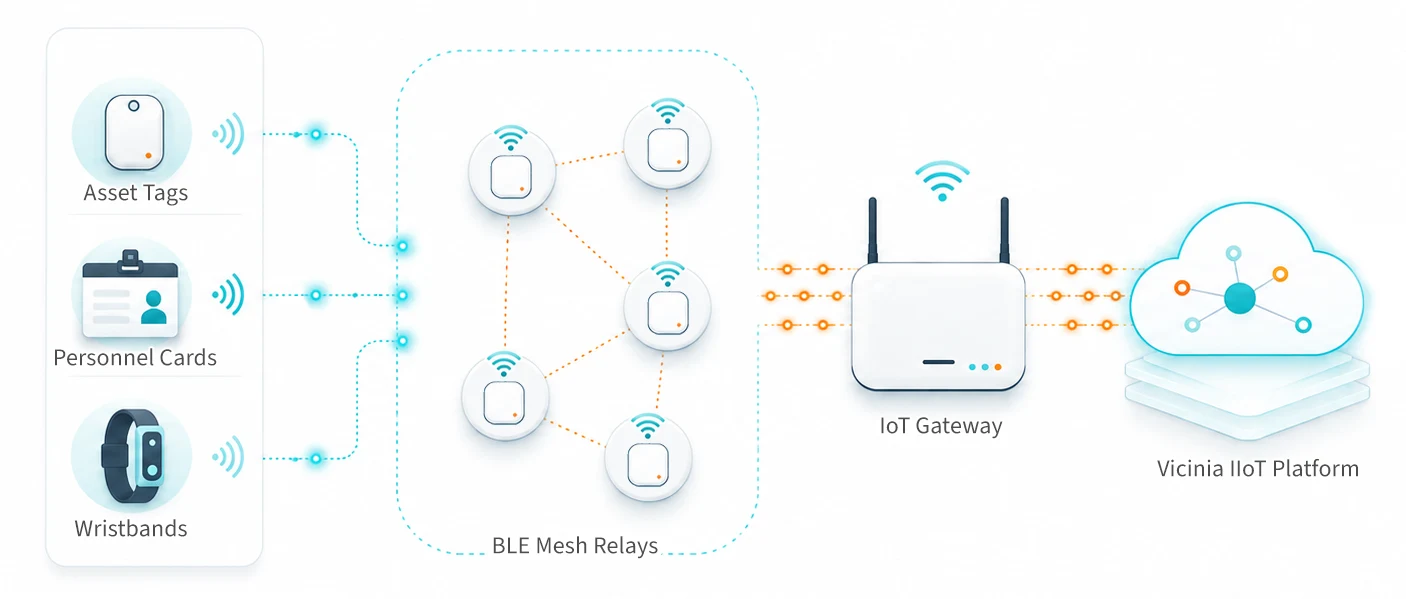
Vicinia Asset Tracking Hardware is powered by the Vicinia IIoT Platform, a scalable Industrial IoT foundation designed to connect tracking devices, RTLS infrastructure, sensors, cloud services, Digital Twins, analytics engines, and enterprise systems within a unified architecture. The platform simplifies deployment, device management, integration, monitoring, and long-term scalability across facilities, campuses, and enterprise portfolios.
Asset tags, RTLS tags, wearable tracking devices, personnel tracking cards, and other RTLS hardware generate location and sensor data. Vicinia IoT Gateways and BLE Mesh Relays collect, validate, aggregate, and securely transport that information through the Vicinia IIoT Platform. The platform then powers Vicinia Assets, transforming hardware signals into asset visibility, asset utilization insights, geofencing, theft protection, alarms, compliance monitoring, and operational intelligence.
The same data powers Digital Twin environments where organizations can visualize asset locations, analyze utilization patterns, investigate operational events, monitor workflows, and support informed decision-making across facilities and campuses.
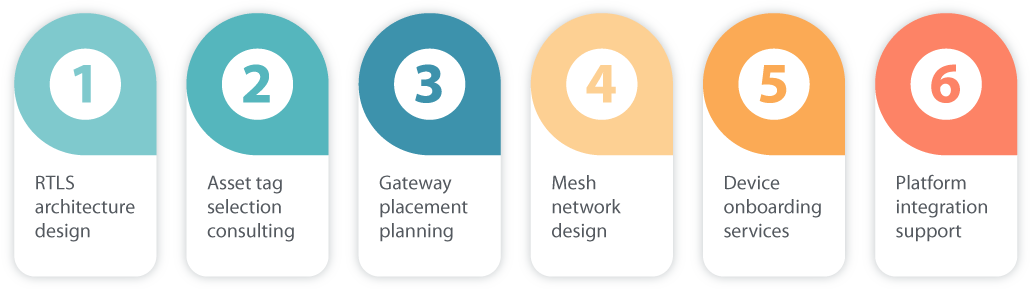
Successful RTLS deployments require more than hardware. Vicinia provides the expertise and services required to plan, deploy, integrate, and optimize enterprise asset tracking environments from initial planning through long-term operation.
Patient tracking bracelets, RTLS badges, and medical equipment tags support visibility into people, equipment, and operational resources.
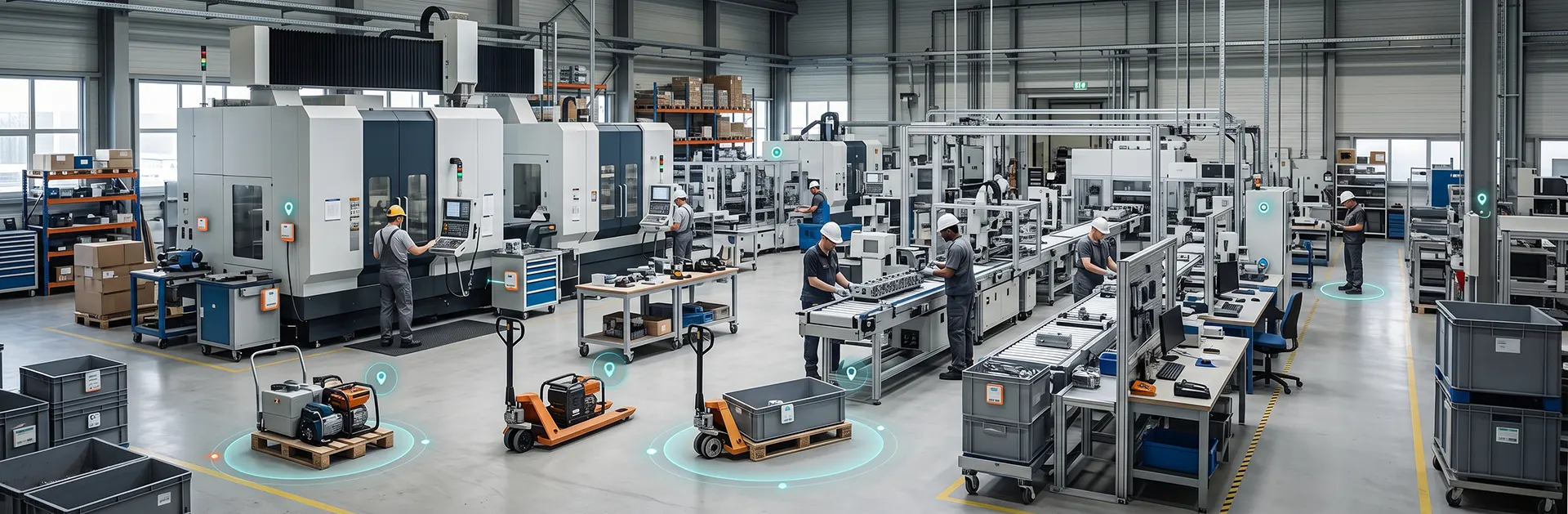
Asset tags and tracking devices monitor equipment, inventory, tools, and production assets while improving operational efficiency.
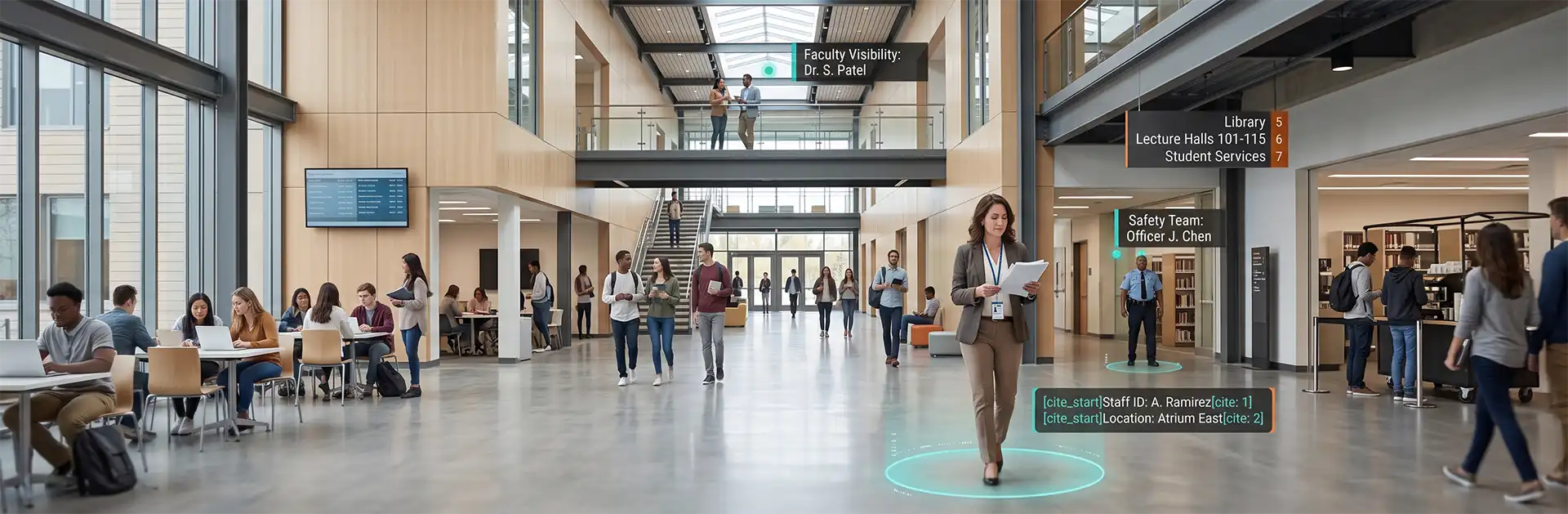
Tracking ID cards and employee tracking badges improve safety, personnel visibility, and operational awareness across campuses.
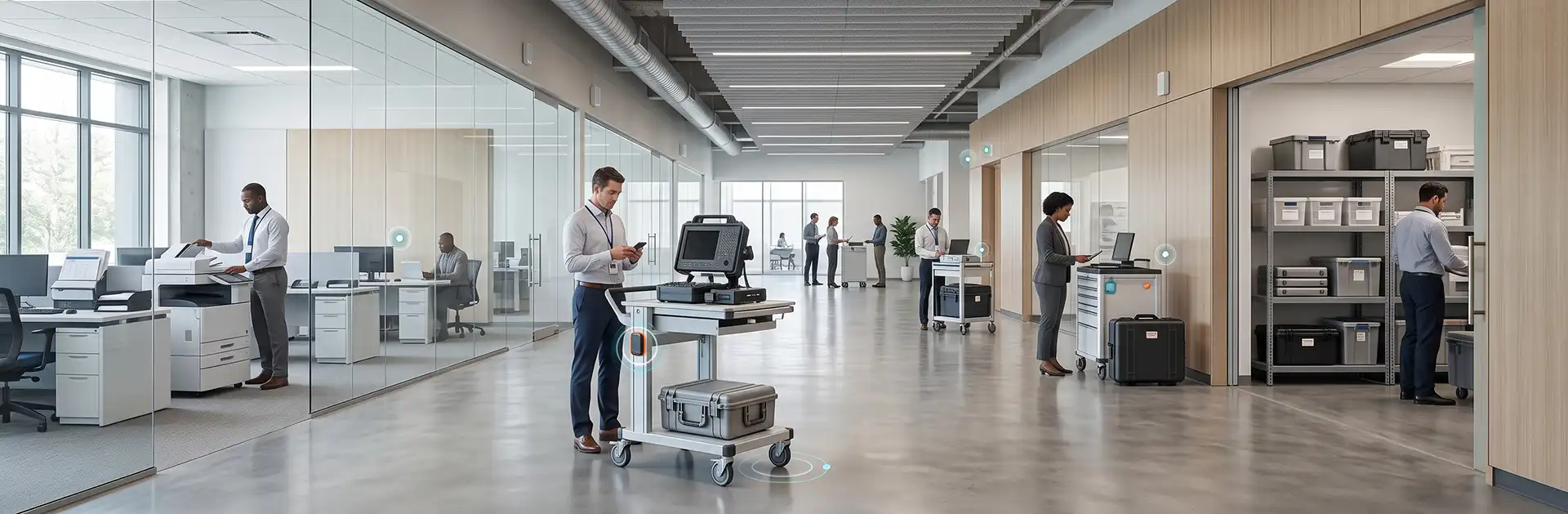
Asset tracking tags and RTLS infrastructure improve accountability, compliance, and resource management.

Tracking devices and RTLS hardware support visibility into operational equipment, mobile assets, and personnel.
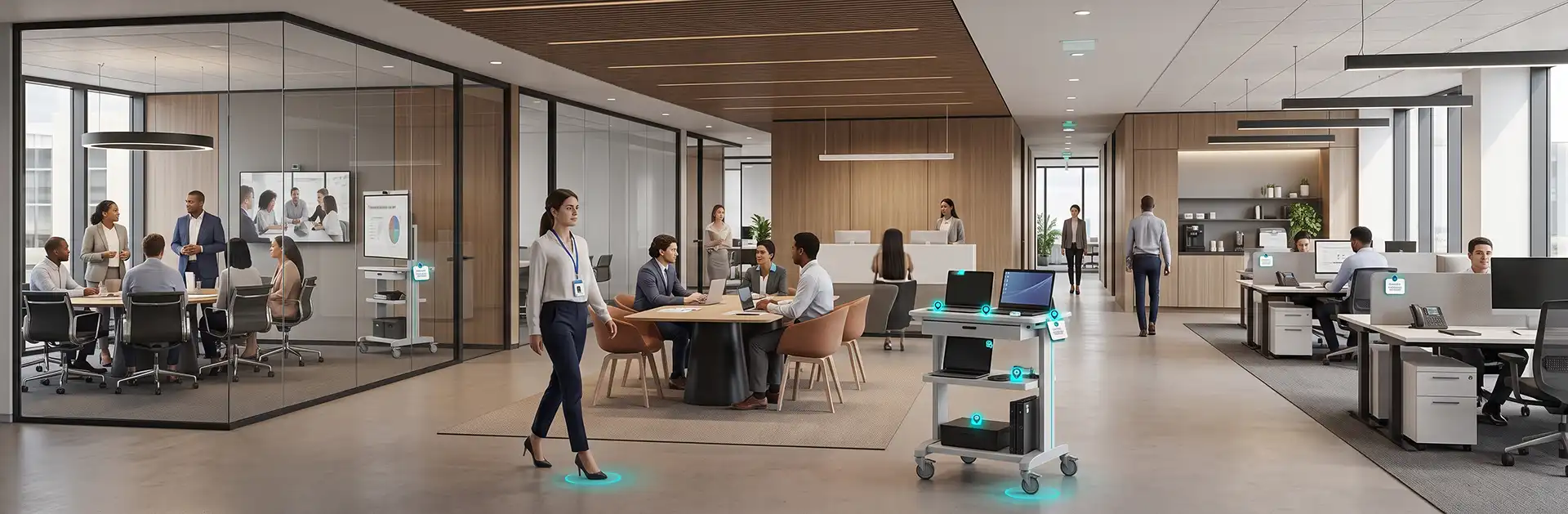
Smart personnel cards, wearable tracking devices, and asset tags help improve visibility, safety, and workplace operations.

Vicinia asset tags can be attached to equipment, tools, inventory, mobile resources, medical devices, carts, containers, and other valuable assets requiring real-time visibility.
BLE asset tags communicate wirelessly with RTLS infrastructure. Location information is collected through IoT Gateways and processed by the Vicinia platform to deliver asset visibility and tracking capabilities.
Personnel cards are ideal when employees already carry identification badges. Wristbands are commonly selected when convenience, safety, or continuous wearability is a priority.
A duress badge includes an emergency assistance function that allows personnel to request help while sharing real-time location information with security or operational teams.
The number depends on building size, layout, construction materials, and desired RTLS coverage. Vicinia assists with gateway planning during solution design.
BLE Mesh Relays are recommended for larger facilities, campuses, hospitals, airports, and industrial environments where additional coverage and network resilience are needed.
Yes. Certain asset tag models support environmental monitoring, including temperature and humidity sensing, alongside asset tracking functionality.
RTLS hardware provides real-time visibility into asset locations and supports geofencing, alerts, and monitoring capabilities that help reduce unauthorized movement and asset loss.
Yes. The architecture is designed for scalable enterprise deployments across hospitals, airports, campuses, government environments, and industrial facilities.
Location data collected through tags, wearables, gateways, and mesh infrastructure is processed by the Vicinia IIoT Platform and delivered to Vicinia Assets for visibility, analytics, reporting, and operational intelligence.