Physical AI is rapidly becoming one of the most discussed frontiers in technology.
From intelligent assistants operating in physical spaces to autonomous systems, robotics, and AI-powered operations, organizations are increasingly asking how machines can interact with the real world as effectively as they interact with information.
The challenge is often framed as an intelligence problem.
In reality, it is equally a context problem.
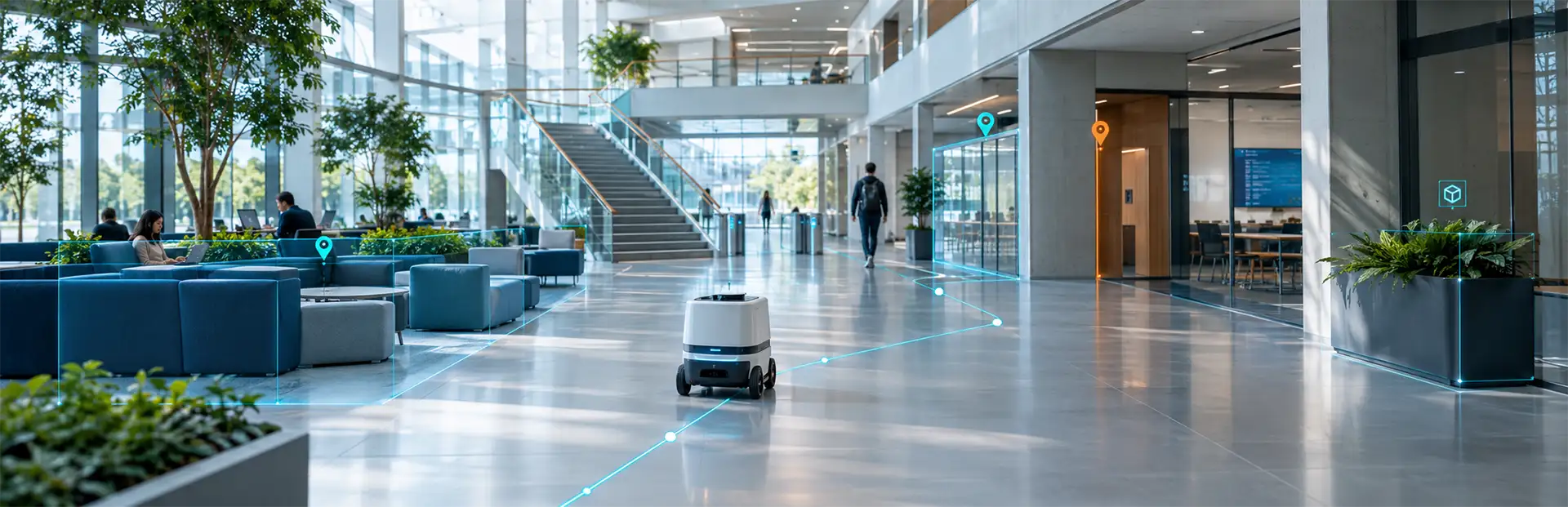
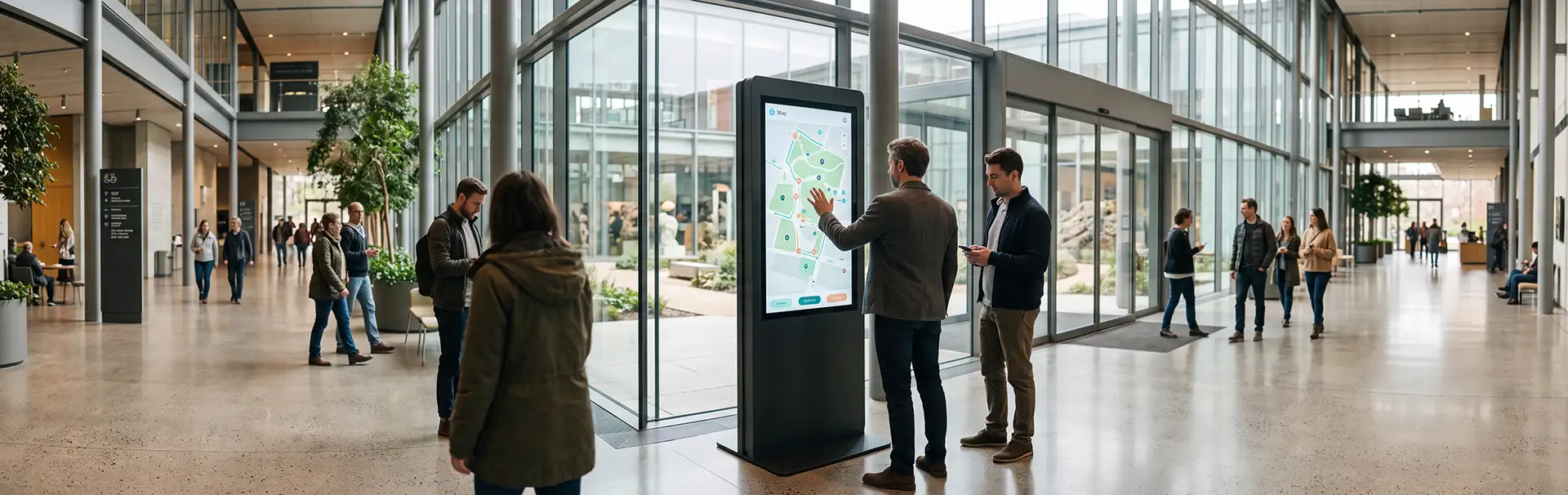
A maintenance agent cannot help repair equipment if it does not know where the equipment is located. A navigation assistant cannot guide a visitor without understanding accessible routes. An autonomous system cannot make intelligent decisions without understanding the environment in which it operates.
Before machines can operate effectively in the physical world, they must first understand it.
The Missing Layer
Much of today’s AI revolution has been powered by access to knowledge.
Large language models can learn from documents, websites, databases, and other forms of digital information. Physical environments introduce a different challenge.
Buildings, campuses, hospitals, transportation networks, and workplaces are not simply collections of information. They are living environments defined by relationships between spaces, people, assets, infrastructure, and activities.
To interact effectively with these environments, intelligent systems need answers to questions such as:
- Where is something located?
- How are spaces connected?
- Which routes are navigable?
- What assets are nearby?
- What is happening right now?
These are questions of context.
Making Physical Space Machine-Understandable
This is where digital twins become increasingly important.
Digital twins are often associated with visualization tools, dashboards, and 3D models. While those capabilities are valuable, they represent only part of their potential.
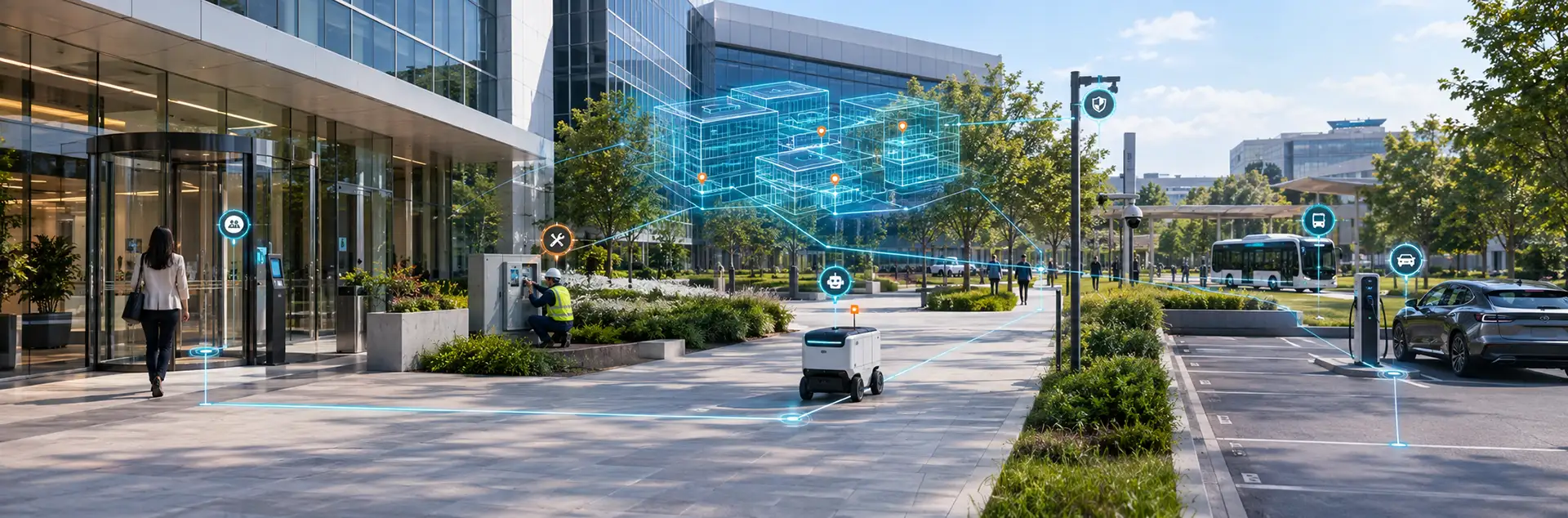
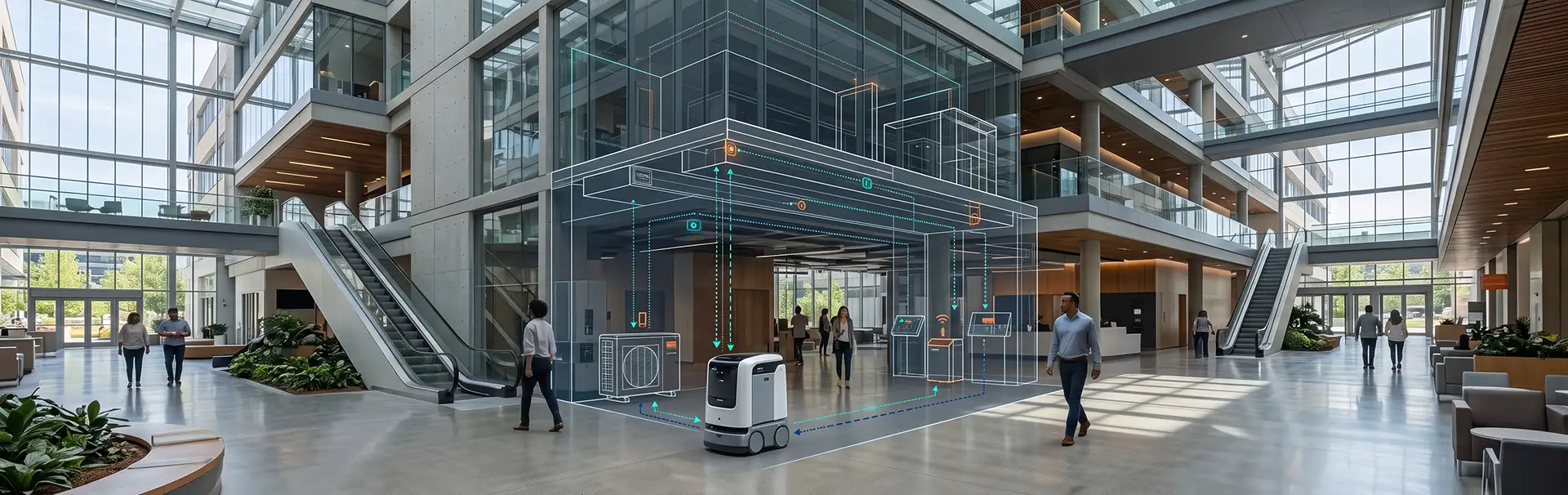
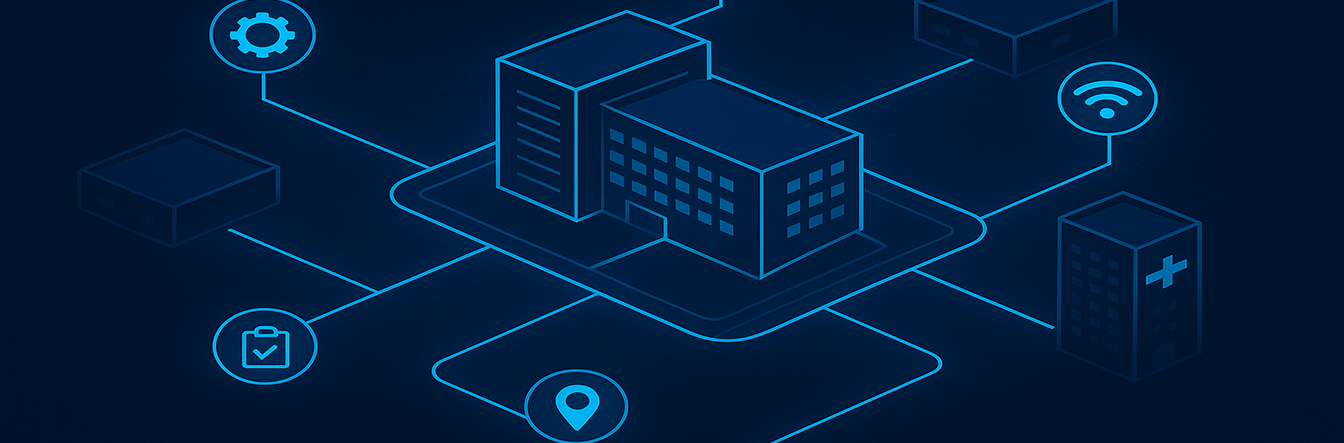
A digital twin creates a structured representation of a physical environment and the systems operating within it. Buildings, spaces, assets, infrastructure, routes, services, and operational activity can all become part of a common operational model.
In doing so, physical environments become machine-understandable.
Instead of forcing intelligent systems to interpret disconnected maps, databases, sensors, and operational systems independently, a digital twin provides a contextual layer describing how the environment actually works.
Digital Twins as World Models
The concept of world models is gaining increasing attention within AI.
At a high level, a world model provides an understanding of an environment and the relationships within it.
For physical environments, that may include:
- Spaces and buildings
- Routes and pathways
- Assets and infrastructure
- Services and destinations
- Real-time operational conditions
Digital twins can serve as these world models, continuously representing both the structure and state of the physical world.
Rather than simply displaying information to people, they create a shared understanding that can be consumed by applications, automation systems, and intelligent agents.
Why This Matters Now
The emergence of Physical AI does not diminish the importance of digital twins.
It may dramatically increase it.
As intelligent systems become more capable, the quality of their decisions will depend not only on the sophistication of the AI model, but also on the quality of the world it understands.
Physical AI requires a machine-readable understanding of physical environments.
Digital twins help provide that understanding.
Looking Ahead
The conversation around Physical AI often focuses on robots, autonomous systems, and increasingly powerful AI models.
Equally important is the contextual layer that allows those systems to understand the world around them.
Physical AI requires more than intelligence. It requires context.
As organizations seek to make physical environments understandable by both people and machines, digital twins may become one of the most important foundations for the next generation of intelligent physical experiences.