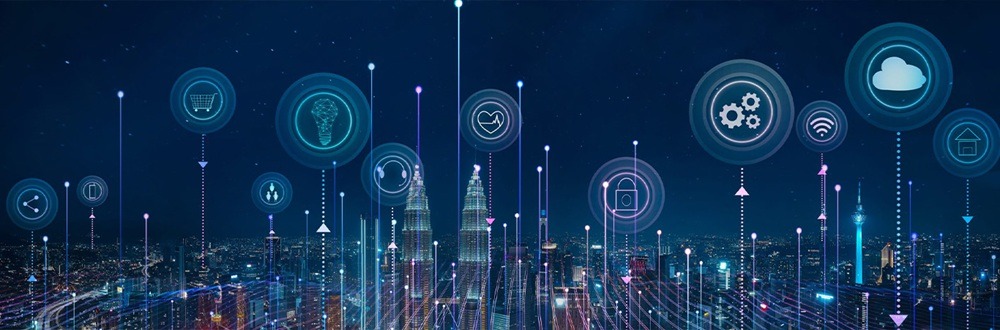
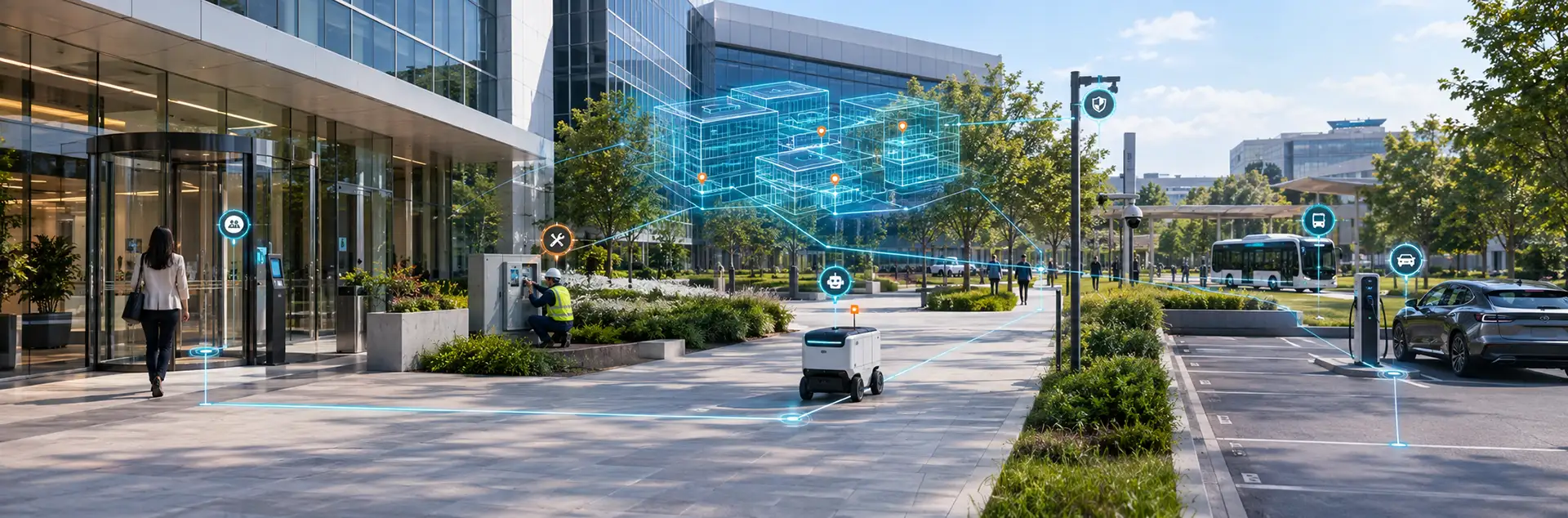
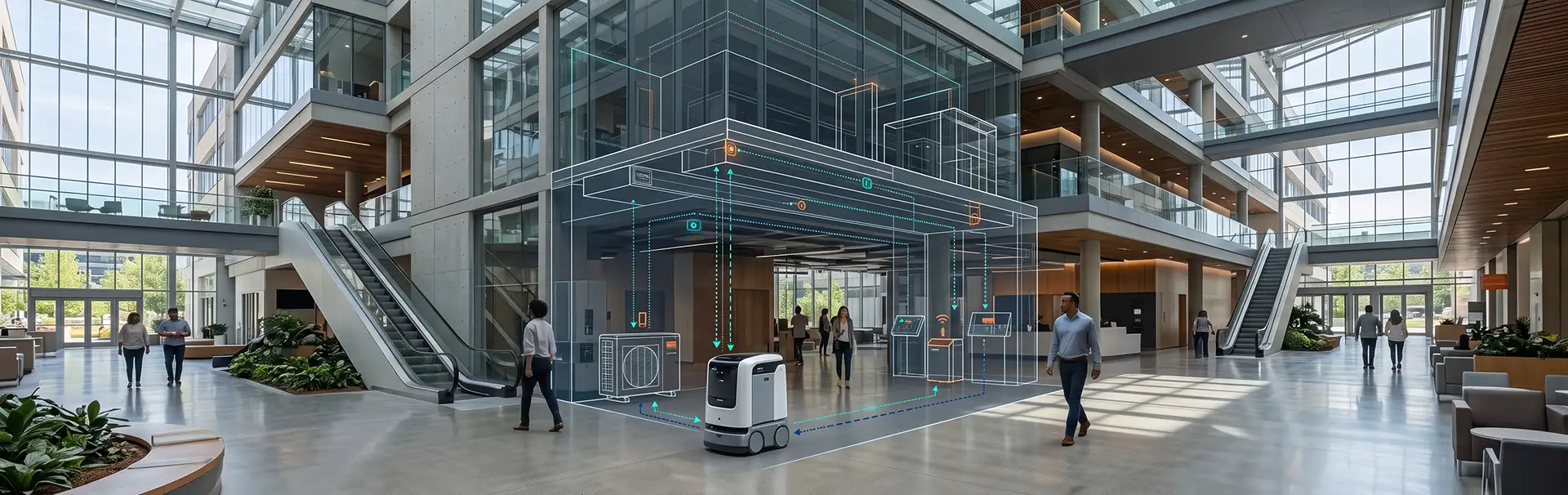
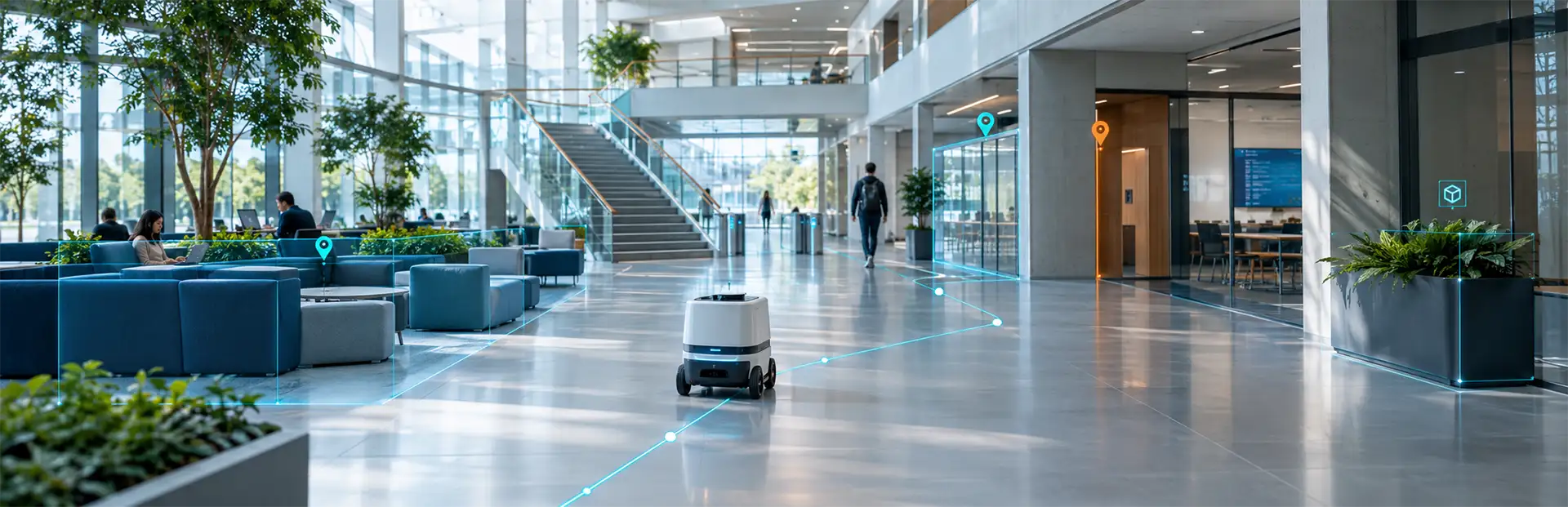
Digital modeling technologies for large physical spaces are rapidly evolving, with Geographic Information System (GIS) technology and Digital Twin technology leading the charge. While GIS has long been the go-to for mapping and spatial data analysis, Digital Twin technology offers a forward-looking approach with dynamic, virtual models that replicate real-world assets. This article explores the key differences and benefits of these technologies, highlighting GIS’s foundational role and the innovative potential of Digital Twin technology.

The Role of GIS in Modern Spatial Data
GIS has been crucial for understanding and managing spatial data, especially for organizations such as government agencies, airports, and universities. It provides a comprehensive framework for resource distribution, space management, and access to critical data through layered, location-based information. By organizing data into visual layers, GIS allows administrators to see patterns and relationships that would be invisible in spreadsheets or traditional databases.
Although GIS is highly effective in these areas, it fundamentally operates on historical or static data. It tells you where an asset is and its historical context, but it often lacks the capability to dynamically reflect real-time changes as they occur. For modern workspace management, this static nature can become a bottleneck when immediate decisions regarding occupancy or environmental conditions are required.
How Digital Twin Technology Transforms Static Models
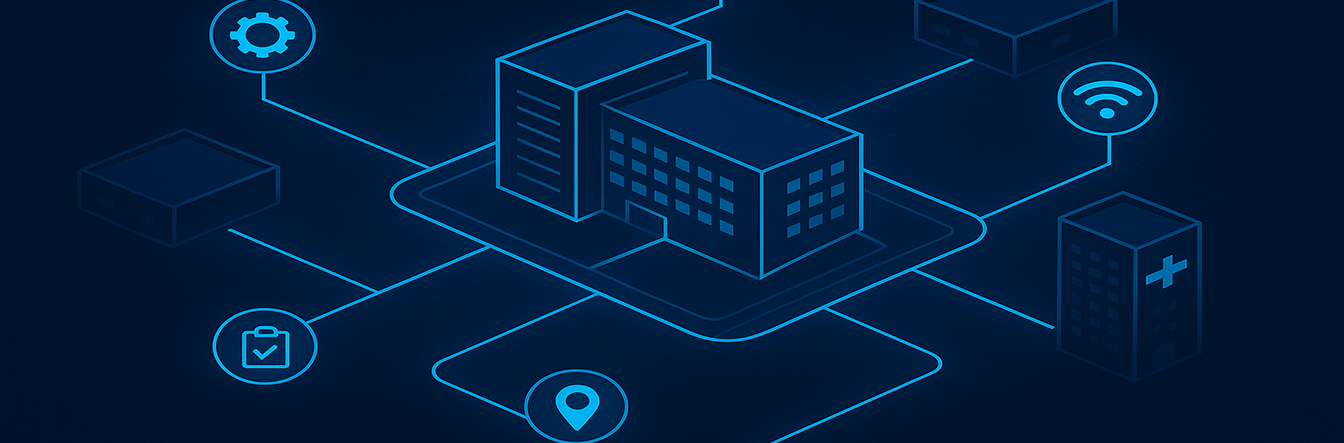
Digital Twin technology builds on the foundation laid by GIS by creating interactive virtual models that mirror physical environments in real time. Unlike a traditional map, a Digital Twin is a living entity. Leveraging the Internet of Things (IoT), Digital Twins ensure real-time updates and bidirectional communication between the physical and virtual worlds.
This dynamic approach enables more efficient management of logistics, energy, and assets, providing a significant advantage over traditional GIS systems. When a sensor detects a change in temperature or room occupancy, the Digital Twin reflects that change instantly. This integration is essential for advanced occupancy intelligence, allowing Vicinia users to monitor how spaces are actually being used moment-to-moment rather than relying on outdated schedules. For more information on Digital Twin technology, visit our detailed whitepaper.
Practical Applications in Campus and Asset Management
Digital Twin technology is transforming how enterprises operate across vast environments. For example, on a university campus, a Digital Twin goes beyond simple mapping. It provides a latitude of location-based services for wayfinding and asset tracking both indoors and outdoors. By integrating indoor positioning software, organizations can track mobile assets and personnel with centimeter-level accuracy.
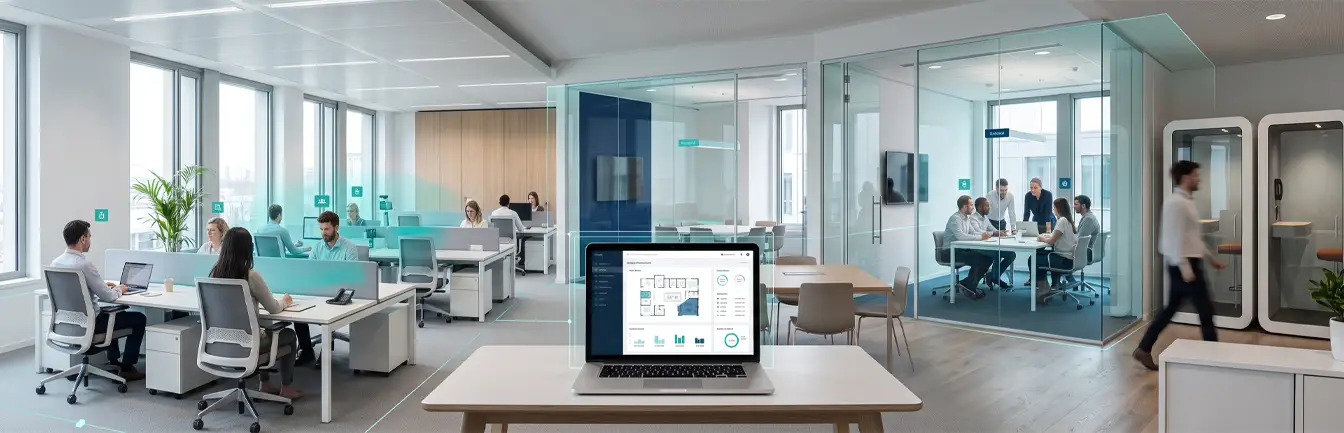
These smart optimization solutions streamline operations and boost efficiency through real-time updates, accurate data tracking and analysis, automation, and AI-powered decision-making. In a workspace management context, this means facilities managers can identify underutilized areas and reconfigure them to better serve the occupants, reducing overhead costs and improving the overall user experience.
5 Core Benefits of Adopting Digital Twins
- Real-Time Updates: Digital Twins continuously reflect physical changes, enabling timely and accurate decision-making based on current conditions rather than old data.
- Predictive Analytics: They offer advanced analysis capabilities, helping organizations predict and address potential issues before they cause downtime or safety risks.
- Enhanced User Experience: Interactive, real-time models provide a more engaging and informative user experience for visitors and employees alike.
- Operational Efficiency: They optimize resource and process management by automating workflows based on actual environmental triggers.
- Scalability: Digital Twins can easily scale to accommodate large and complex environments, from single buildings to entire smart cities.
Future-Proofing with Vicinia Solutions
Digital Twin technology is revolutionizing enterprise resource management by integrating IoT to optimize operations and improve efficiency. Vicinia’s innovative platforms enable organizations to leverage the full potential of Digital Twins, paving the way for a smarter, interconnected future. Whether it is managing complex asset networks or improving the flow of people through a facility, the transition from static GIS to dynamic models is inevitable.
To explore how this technology can transform your operations, check out our comprehensive whitepaper and discover the possibilities with Vicinia. By embracing these advancements, enterprises can ensure they are not just reacting to the world around them but actively optimizing it for better performance and sustainability.