
Corporate campuses increasingly adopt innovative systems to enhance operational efficiency and employee experiences. Among these innovations, digital twin technology emerges as a transformative solution. Digital twins enable real-time visualization and dynamic management of corporate environments by creating a virtual replica of physical spaces. This blog explores how digital twin technology revolutionizes employee navigation and indoor wayfinding, benefiting key roles such as Facilities Managers, Corporate Facilities Directors, and Facilities Engineers.
1. What Is a Digital Twin, and Why Is It a Game-Changer?
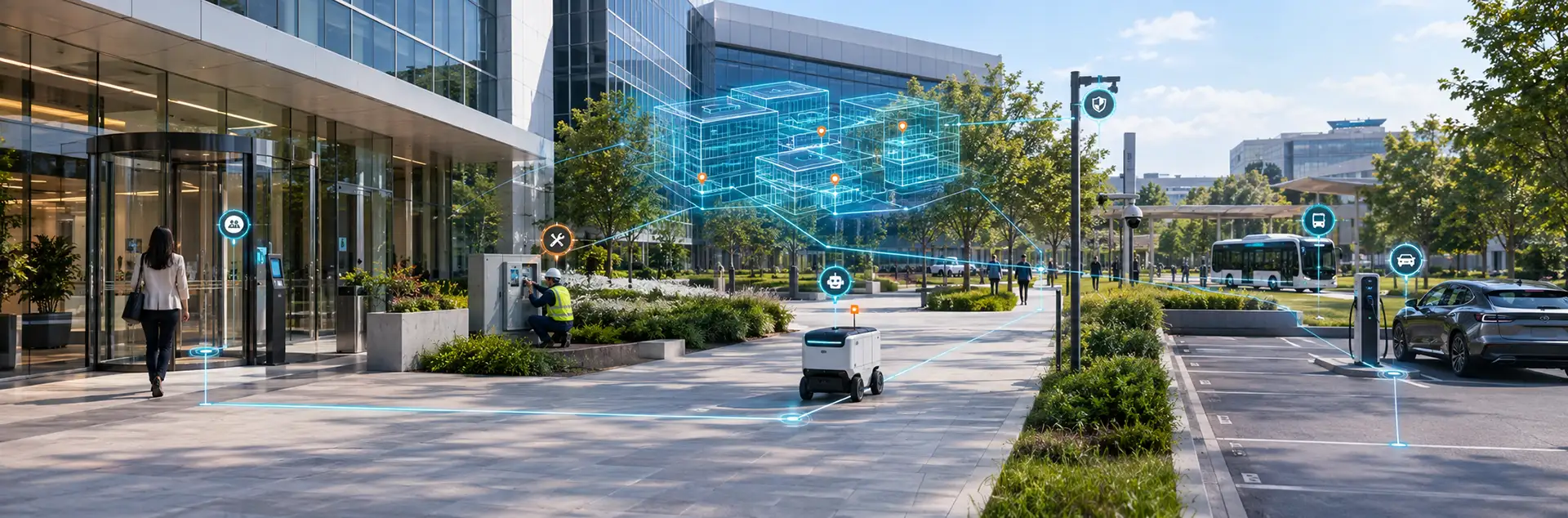
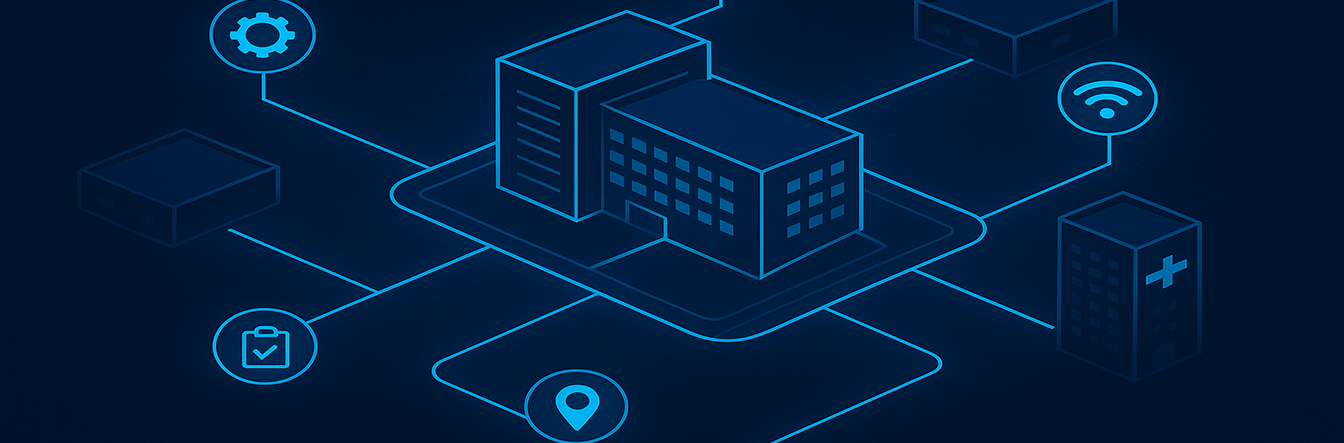
A digital twin is a virtual representation of a physical entity connected through real-time data. It offers an interactive, evolving workplace model that reflects changes in the physical environment. Powered by data from IoT sensors, GPS systems, and other advanced technologies, digital twins provide a holistic view of complex corporate campuses. By integrating various data streams, Vicinia helps organizations move beyond static maps to dynamic, living representations of their infrastructure.
This technology is invaluable for large, intricate campuses where managing space, optimizing resources, and ensuring seamless navigation can be daunting. With digital twins, employees can access real-time maps to locate meeting rooms, workstations, or amenities instantly. Furthermore, facilities teams can monitor building performance and make data-driven decisions to enhance efficiency, reducing waste and improving the overall workplace atmosphere.
2. Core Technologies Behind Digital Twin Technology Solutions
Implementing digital twin technology requires a robust infrastructure of advanced systems to create a seamless experience. Key technologies include:
- IoT Sensors: These devices capture real-time data about temperature, occupancy, air quality, and lighting levels to ensure a comfortable environment.
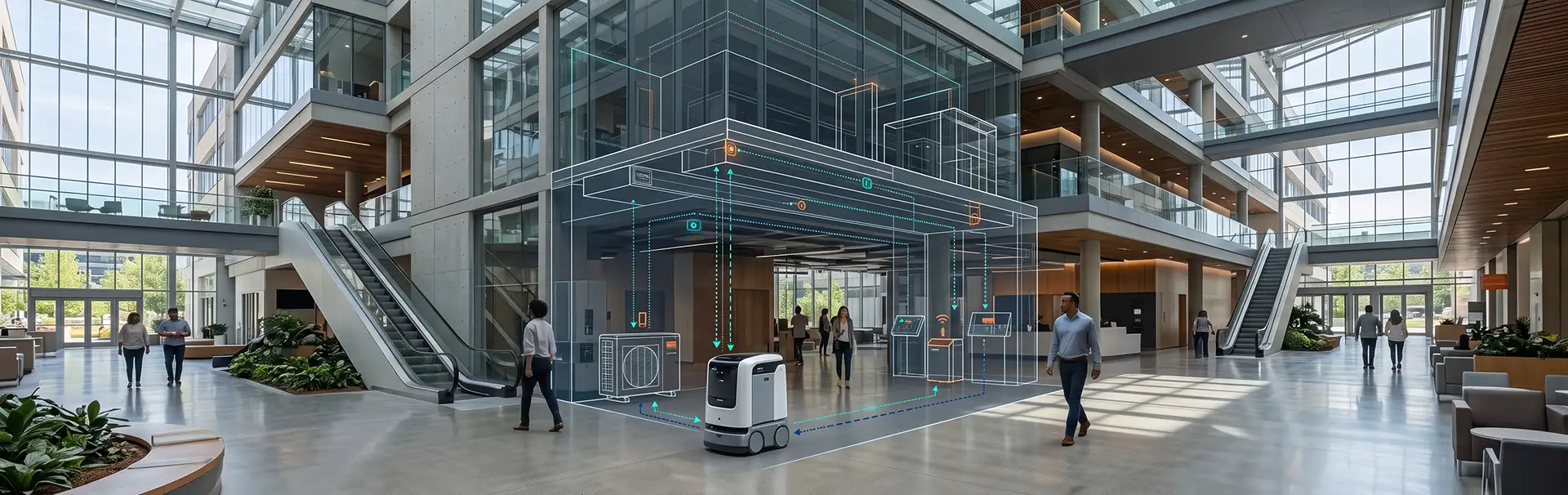
- 3D Mapping and Modeling Tools: Software like BIM (Building Information Modeling) creates detailed digital replicas of physical spaces, allowing for precise architectural visualization.
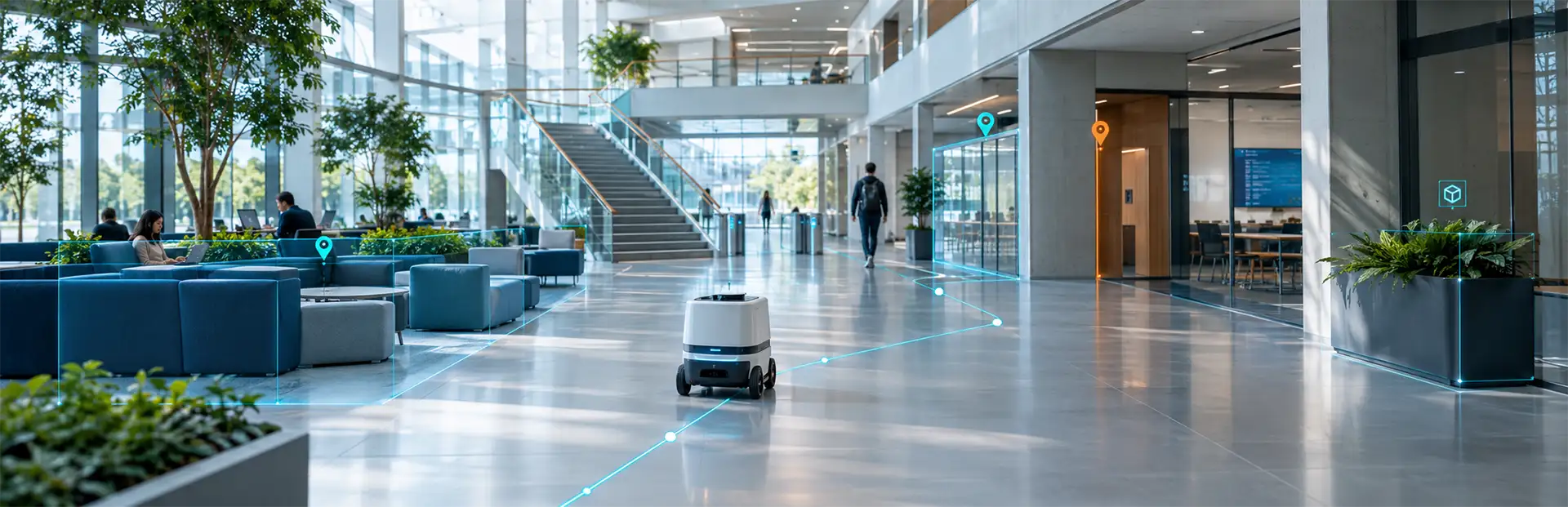
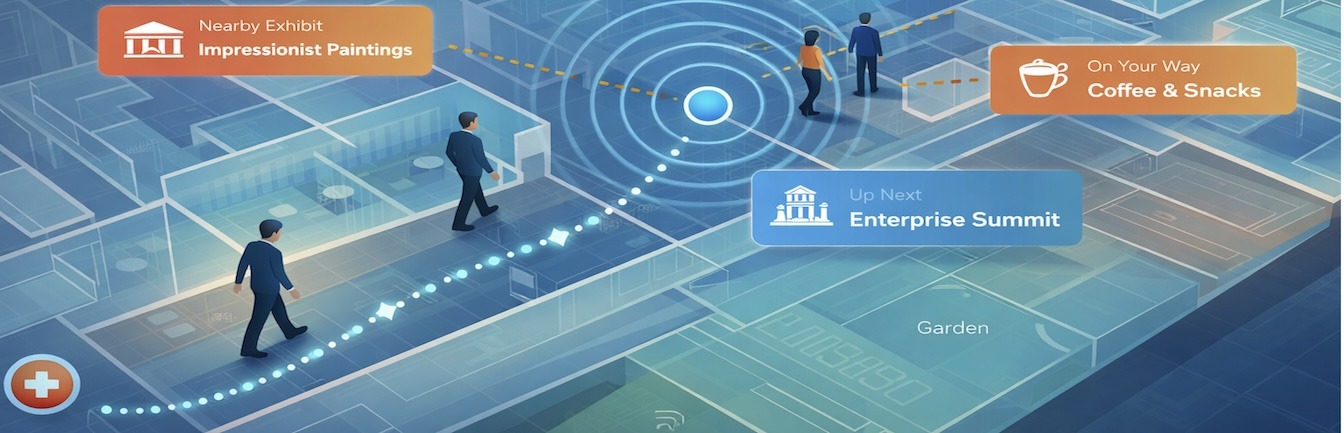
- Indoor Positioning Systems: These systems enable precise navigation and wayfinding within large campuses where traditional GPS often fails.
- Cloud and Edge Computing: These provide the computational power required to process vast amounts of real-time data from thousands of connected devices.
- AI and Machine Learning: Artificial intelligence facilitates predictive analytics for maintenance and helps in long-term operational optimization.
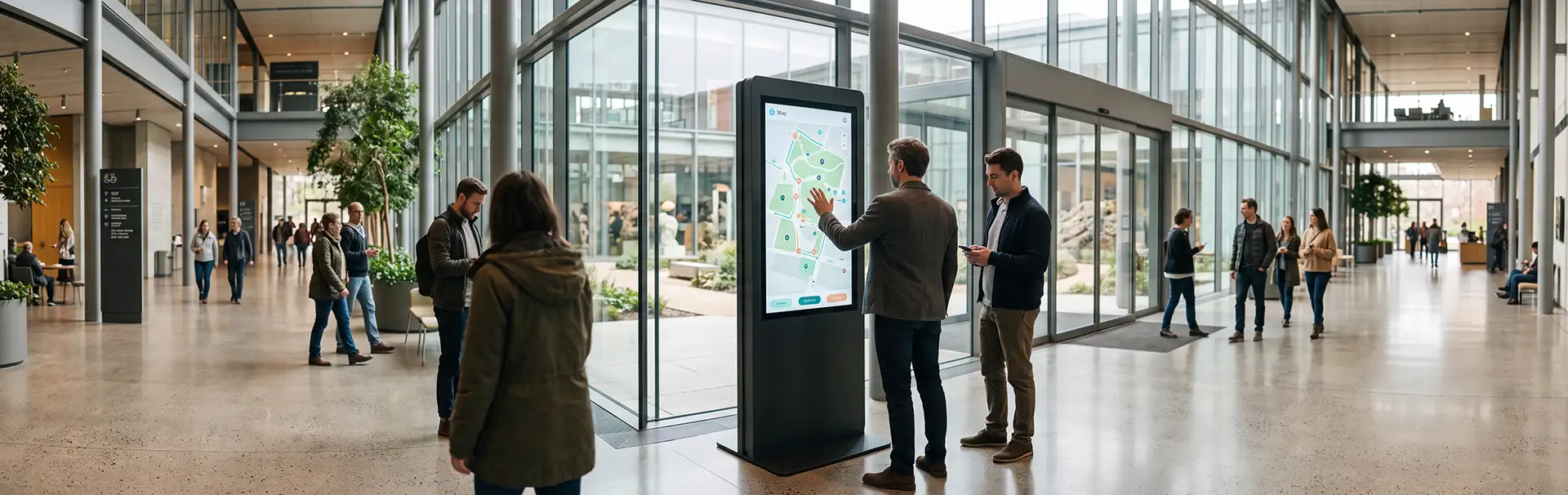
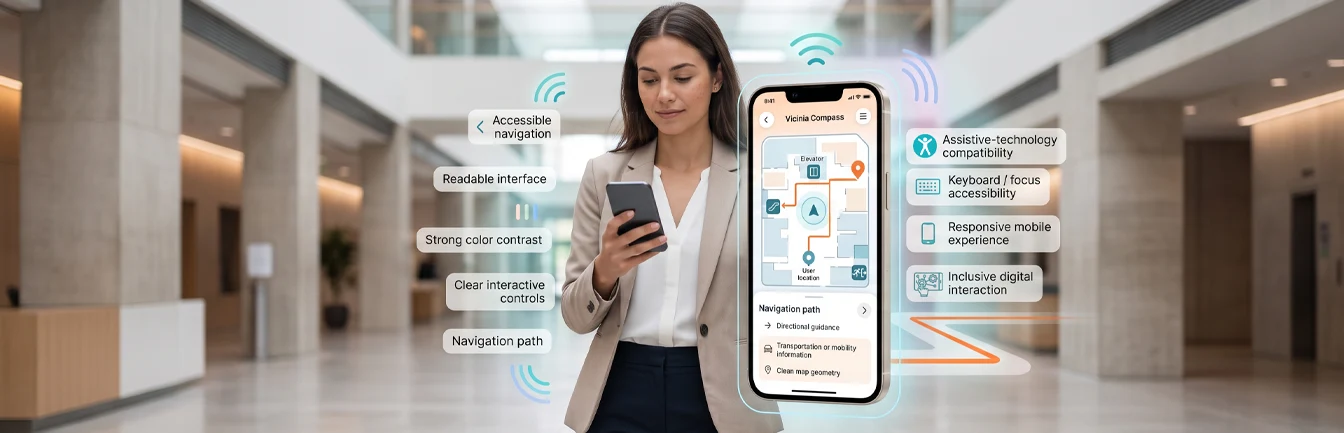
- Mobile Apps and Kiosks: These serve as the primary user interfaces for employees and visitors to interact with the digital twin via wayfinding kiosks.
3. Revolutionizing Facilities Management with Real-Time Data
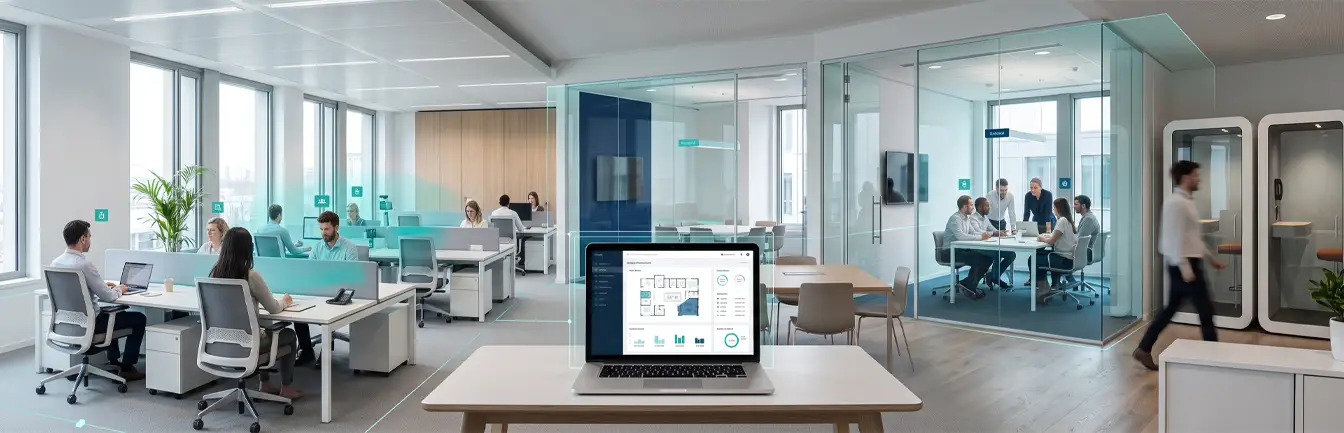
Facilities management is one of the primary beneficiaries of digital twin technology. By centralizing data into a single pane of glass, managers gain unprecedented control over their assets. Facilities Managers use real-time data to monitor occupancy patterns, identify underutilized spaces, and optimize layouts to meet evolving demands. This allows for more flexible seating arrangements and better resource allocation.
Corporate Facilities Directors leverage comprehensive campus overviews for strategic planning, future expansions, and sustainability initiatives. Meanwhile, Facilities Engineers benefit from actionable insights to improve operational efficiency and reduce costs by identifying mechanical inefficiencies before they lead to system failures.
4. Optimizing Maintenance and Campus Operational Efficiency
Maintenance and operations are critical to ensuring smooth campus functionality. Digital twins simplify these processes with actionable insights that allow teams to move from reactive to proactive strategies. Facilities Maintenance Managers can easily locate malfunctioning equipment or assets requiring service, reducing the time spent searching through large facilities.
Predicting potential issues through data analysis significantly reduces downtime. Facilities Operations Specialists can assign tasks efficiently and resolve problems swiftly, minimizing disruptions to the workforce. This streamlined approach ensures that the physical environment remains in peak condition with minimal manual oversight.
5. Facilitating Seamless Navigation for Employees and Visitors
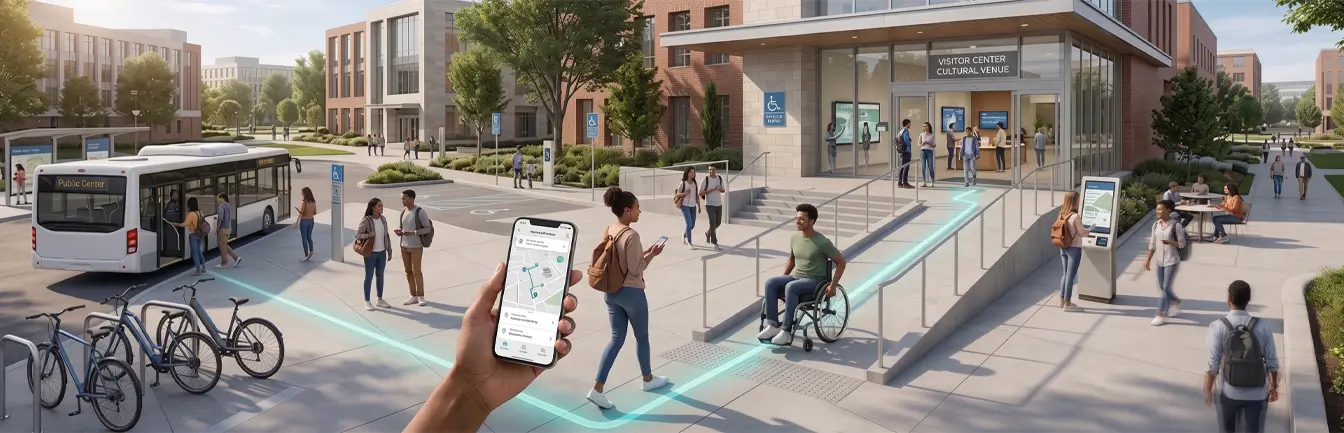
Navigating large corporate campuses can be overwhelming, especially for new employees or visitors. Digital twins transform this experience with intuitive, real-time navigation solutions. Users can access real-time directions through mobile apps, kiosks, or web platforms, simplifying their campus journey from the parking lot to their specific desk.
Dynamic routes are a standout feature, as navigation updates automatically reflect room availability or temporary restrictions, such as maintenance closures. This level of responsiveness ensures that no one gets lost and that the flow of movement within the building remains efficient and stress-free.
6. The Strategic Role of Data-Driven Administration
For administrative teams, digital twins provide robust, permission-based control via a comprehensive desk solution. This ensures that sensitive information is only accessible to authorized personnel. Data access and control are tailored to specific user roles and permissions, ensuring secure management across the entire campus.
Insights from rich data visualization support informed daily decisions, from space allocation to long-term planning. By understanding how the building is actually used, administrators can make choices that prioritize employee well-being and operational cost-effectiveness.
7. Addressing Challenges in Digital Twin Adoption
While digital twin technology offers numerous advantages, integrating it into existing facilities can present challenges. Initial costs for sensors and infrastructure can be high, but this is a long-term investment that saves budgets over time through efficiency. Data integration from legacy systems may also require extensive customization and technical expertise.
User adoption is another hurdle; employees and visitors may initially resist using new systems. Comprehensive onboarding and support are essential. Furthermore, handling sensitive data responsibly is critical to maintaining user trust and compliance with privacy regulations. Regular maintenance and updates to hardware and software are necessary to keep the system accurate.
8. Helping Employees and Visitors Adapt to New Systems
Adapting to this technology can be made seamless through user-friendly interfaces. Intuitive mobile apps guide users with real-time directions and location-based recommendations. Personalized experiences, such as tailored navigation based on accessibility needs, further enhance adoption rates.
Introducing the technology through workshops, tutorials, or app-based guidance helps users understand the full potential of the digital twin. Continuous feedback loops allow Vicinia to refine the system constantly, ensuring the user experience remains top-tier and meets the actual needs of the workforce.
9. Conclusion: The Future of Smart Workplaces with Vicinia
In conclusion, digital twin technology is revolutionizing corporate campuses, making them more innovative, responsive, and employee-centric. From streamlining navigation to enhancing maintenance and driving sustainability, these innovations empower facilities teams to create workplaces that prioritize efficiency and well-being. By utilizing the Vicinia platform, organizations can bridge the gap between physical spaces and digital management.
Ready to transform your workplace? Contact us today for a demo and discover how digital twin technology can redefine your corporate campus and elevate your operational standards.