
Modern corporate campuses are designed to inspire innovation and collaboration—but their size and complexity can make navigation overwhelming. Employees, visitors, and even long-time staff can waste valuable time trying to locate the right building, office, or meeting space. This is exactly where digital wayfinding solutions make a measurable, immediate difference in daily operations.
By replacing static signs and confusing printed directories with dynamic, real-time interactive mapping, organizations can drastically reduce friction. When visitors or new hires wander through complex hallways, it doesn’t just cause frustration; it impacts productivity and the overall perception of your brand. Let’s explore how modern navigation technology is transforming the corporate workplace.
What Are Digital Wayfinding Solutions?
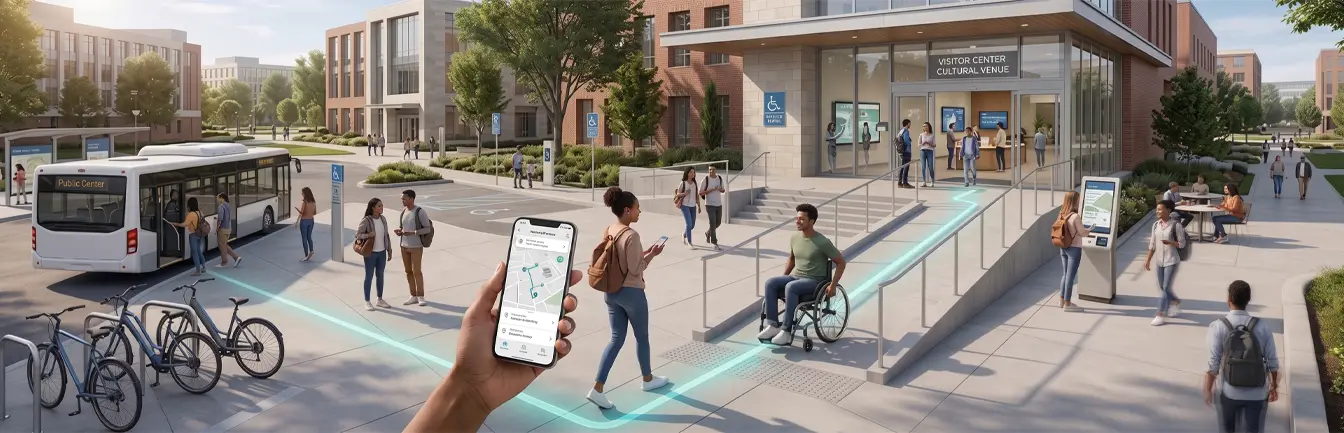
At their core, digital wayfinding solutions utilize interactive maps, digital kiosks, and mobile applications to provide clear, step-by-step navigation across large and complex campuses.
Unlike traditional static signage, digital systems are inherently dynamic. Facility managers can easily update routes, close off sections for maintenance, or change room assignments from a centralized dashboard. This ensures that the information accessed by users—whether on a smartphone app or a lobby kiosk—is always accurate, accessible from anywhere, and updated in real time.
Why Corporate Campuses Need Advanced Navigation
Implementing these intelligent mapping platforms brings several distinct advantages to large organizations:
- Time Savings & Productivity: Employees no longer waste time searching for meeting rooms, specific departments, or specialized facilities. They can get to work faster.
- Improved Visitor Experience: Guests feel welcomed, independent, and guided instead of overwhelmed by a sprawling facility.
- Reduced Support Load: Reception staff, administrators, and security teams spend significantly less time answering basic directional questions.
- Real-Time Communication: Critical updates, such as last-minute room changes, blocked pathways, or emergency alerts, can be delivered instantly to users’ devices.
- Enhanced Safety & Compliance: Vendors and staff can be guided strictly through approved routes. Furthermore, emergency navigation supports faster and safer evacuations during a crisis.
Two Main Types of Digital Wayfinding Solutions
When evaluating navigation platforms, organizations typically choose between two primary tracking methods based on their specific needs and budget.
Wayfinding Without Blue Dot (Static Positioning)
This type of wayfinding provides a highly effective map-based navigation experience where users manually input or select their starting point.
- How it works: Visitors access an interactive map via a physical kiosk, a web link, or a mobile app. They manually choose their current location (e.g., “Lobby A”) and their destination (e.g., “Conference Room 220”), and the system generates a clear, step-by-step visual route.
- Benefits: It is highly cost-effective, requires no specialized hardware sensors or beacons, is very quick to deploy, and is incredibly easy to maintain.
- Best for: General visitor guidance, event navigation, and open spaces where pinpoint precision tracking isn’t critical.
Wayfinding With Blue Dot (Real-Time Positioning)
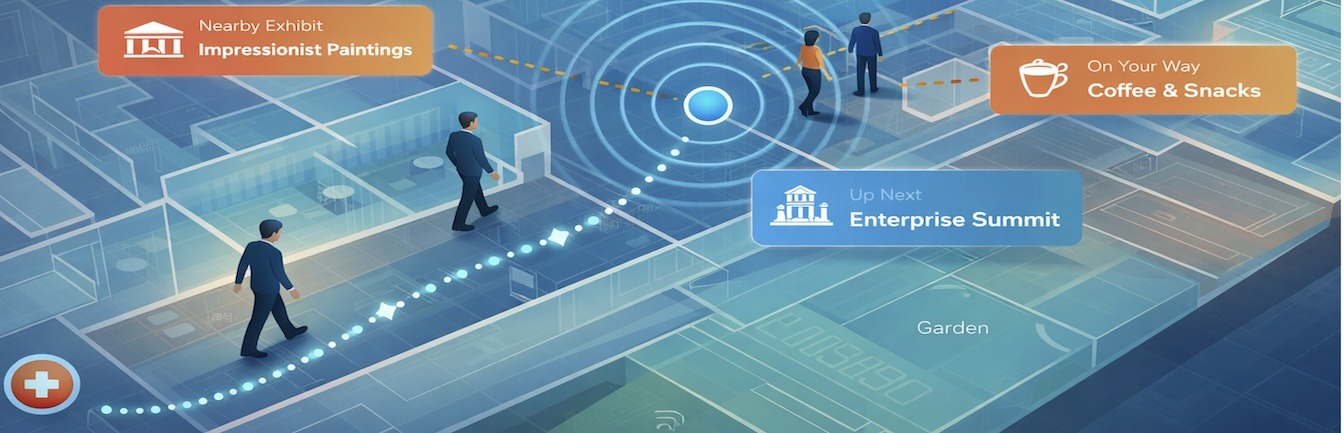
This advanced version offers a “you are here” experience—very similar to how smartphone GPS works outdoors—where a live blue dot tracks the user’s movement in real time indoors.
- How it works: It utilizes indoor positioning technologies, such as Bluetooth Low Energy (BLE) beacons, Wi-Fi triangulation, or sensor fusion, to detect the user’s exact location inside the campus. The system seamlessly updates their movement on the map as they walk.
- Benefits: It is highly intuitive, entirely removes navigation guesswork, and significantly enhances user confidence, especially in massive or visually complex spaces.
- Best for: Daily employee navigation, hybrid work desk-finding, emergency evacuations, and optimized accessibility routing.
Tip: Many campuses start with a non-blue-dot solution for cost efficiency and speed, then seamlessly scale into blue-dot navigation as user adoption grows.
Key Features of Effective Wayfinding Systems
The best platforms offer robust tools that go far beyond simple mapping. According to top facility management software directories, the most effective space management tools must include:
- Interactive Indoor & Outdoor Maps: Seamlessly covering everything from exterior parking lots to interior office floors.
- Searchable Directories: Allowing users to quickly locate specific departments, vital amenities, or individual staff members.
- Multi-Channel Access: Ensuring maps are available via mobile devices, interactive kiosks, and desktop web portals.
- Custom Branding: Aligning the entire navigation experience with the company’s unique culture and visual design standards.
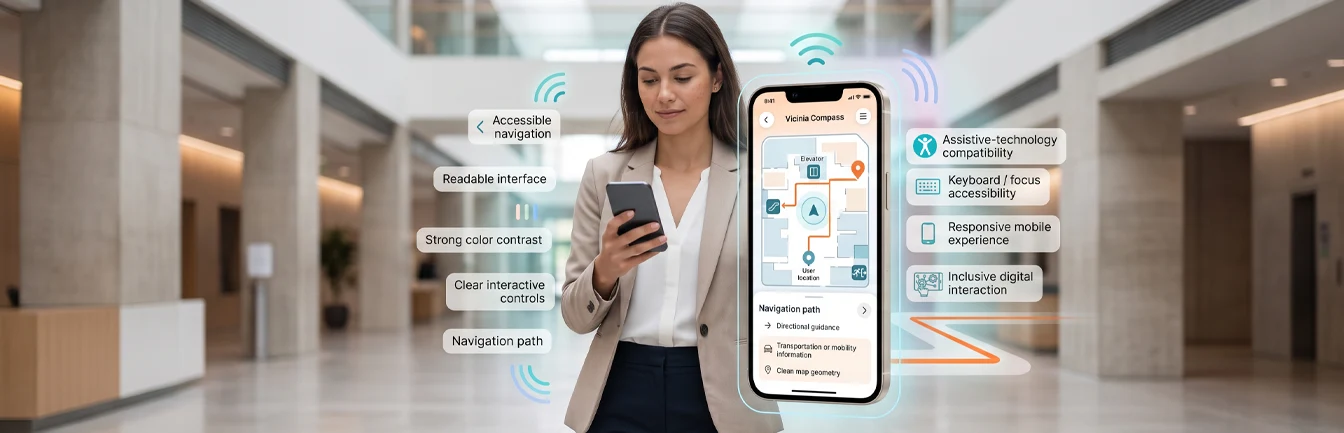
- Accessibility Support: Providing routes strictly optimized for ADA compliance, complete with voice guidance and multi-language options for global teams.
High-Impact Use Cases in Corporate Campuses
Deploying digital wayfinding solutions solves several specific operational challenges across modern corporate real estate:
- Employee Onboarding: New hires can independently find their way during their critical first weeks, easing their transition and reducing anxiety.
- Client and Partner Visits: Streamlined, high-tech navigation creates a highly professional, polished, and innovative first impression.
- Hybrid Work & Desk Booking: Staff returning to the office can effortlessly locate available hot desks or meeting rooms and navigate directly to them.
- Maintenance Vendors: Service providers and external contractors can efficiently locate equipment rooms, utility areas, or restricted zones without requiring a staff escort, saving time and minimizing daily disruptions.
Transform Your Campus Today
Digital navigation is no longer just a “nice-to-have” novelty—it is becoming an absolutely essential pillar of modern smart building design. Whether deployed with or without blue dot positioning, these platforms enhance operational navigation, dramatically boost employee productivity, and support safety compliance.
If you want to discover how to integrate these solutions into your facility, contact us today for a free demo.