
When people hear the word accessibility, different things often come to mind.
For some, accessibility means ramps, elevators, accessible parking, and ADA-compliant facilities. For others, it means digital accessibility, inclusive design, websites that work seamlessly across devices, and information that can be accessed by everyone. Others associate accessibility with transportation options, campus navigation, wayfinding, visitor services, or emergency preparedness.
The reality is that accessibility encompasses all of these perspectives.
Accessibility is not a collection of independent initiatives. It is a connected experience that influences how people access information, move through environments, reach destinations, and participate in the experiences around them.
As organizations strive to create more inclusive campuses, communities, transportation systems, workplaces, and public spaces, accessibility is increasingly being viewed as a holistic discipline that spans both digital and physical environments.
Accessibility Is Experienced as a Journey
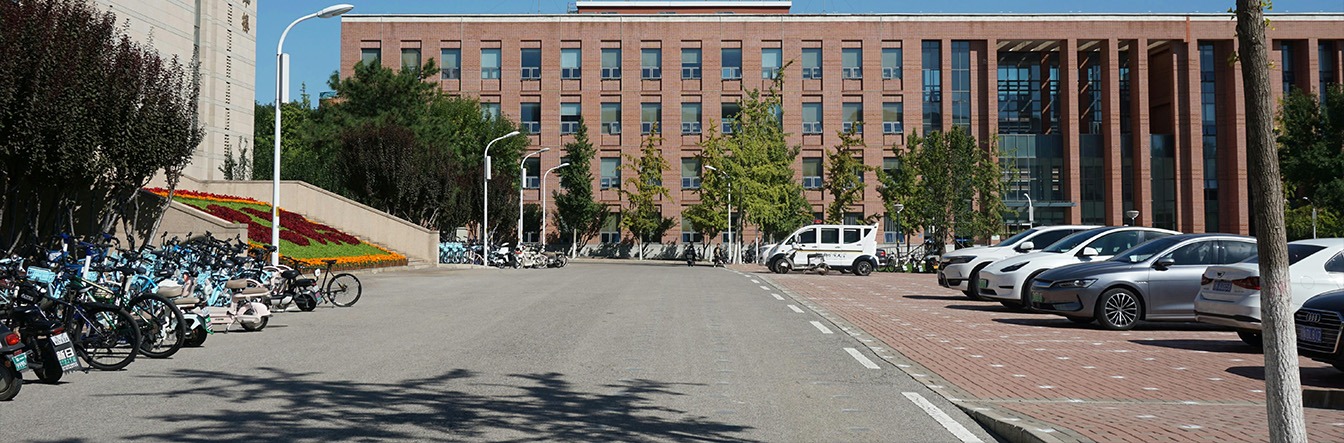
Consider a prospective student visiting a university campus for the first time.
Before they arrive, they need access to information. They may be reviewing a website, consulting interactive maps, looking up transportation options, identifying parking locations, or planning their route using a mobile device.
Next comes the journey itself.
Should they drive, take transit, ride a shuttle, bike, walk, or use a ride-sharing service? Which option is most convenient? Which option best meets their needs?
Once they arrive, they need to find parking, locate a building, identify the appropriate entrance, navigate unfamiliar spaces, and reach their destination efficiently.
Finally, they want to focus on the experience itself, whether that’s attending a class, touring a campus, visiting a museum, participating in an event, accessing municipal services, or exploring a cultural destination.
To that individual, these are not separate accessibility initiatives.
They are one continuous journey.
This broader perspective reveals that accessibility is best understood through multiple interconnected dimensions that together create more inclusive and engaging experiences.
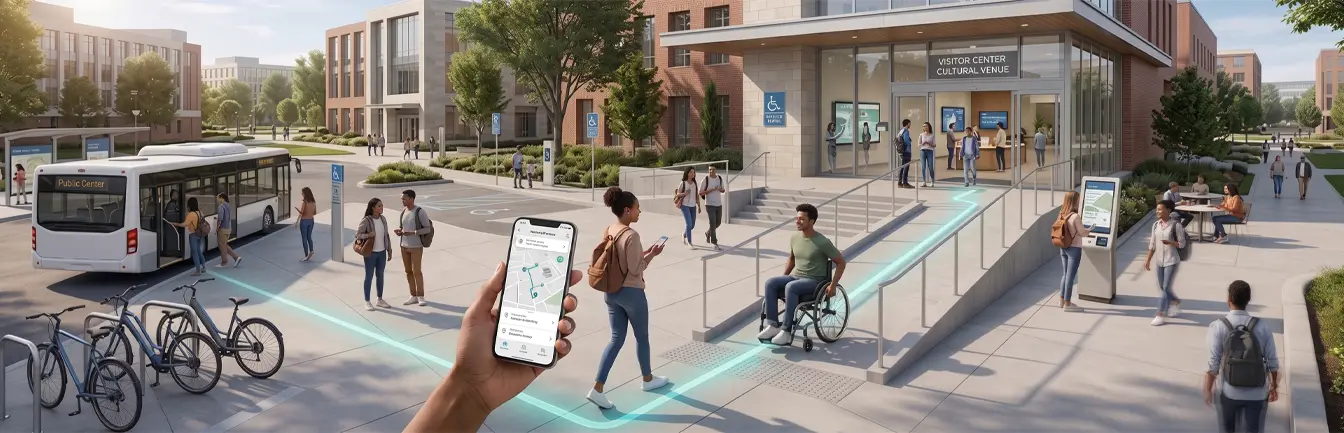
A practical example illustrates this well. A visitor heading to a university campus may begin by accessing information online, choosing between driving, transit, cycling, or walking, locating accessible parking, identifying an accessible entrance, navigating to a classroom or event venue, and ultimately participating in the campus experience itself. Accessibility touches every stage of that journey. Success depends not on a single accessibility feature, but on how well the entire experience works together.
Dimension 1: Digital Accessibility
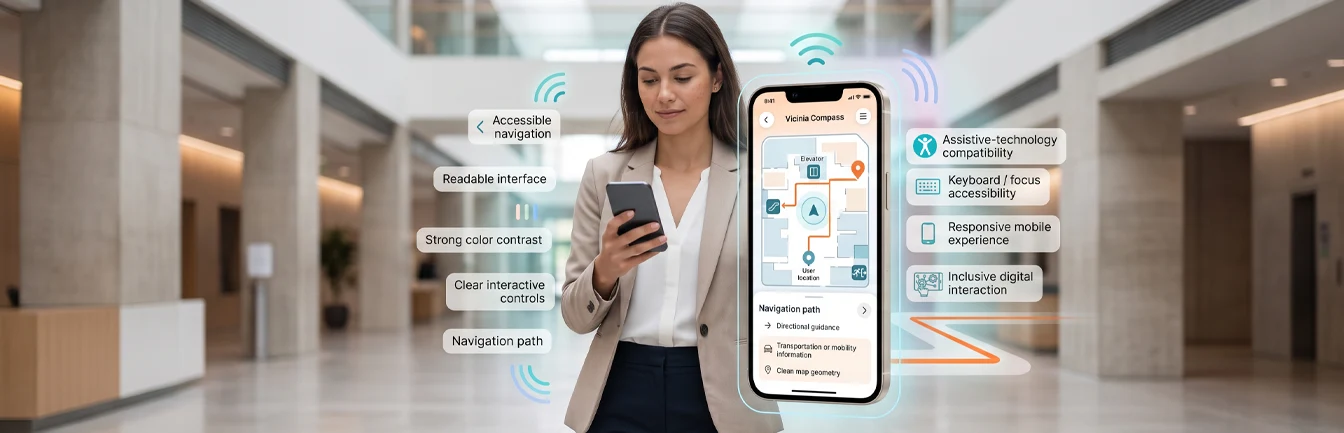
Digital accessibility focuses on ensuring information and services can be accessed, understood, and used by everyone.
This includes websites, mobile applications, campus maps, interactive maps, digital forms, online services, and other digital experiences.
When digital accessibility is implemented effectively, users can access information regardless of device, screen size, or method of interaction. The result is not only better accessibility, but often better usability for everyone.
For many organizations, digital accessibility serves as the foundation for everything that follows. Before someone can travel to a destination, navigate a facility, or participate in an experience, they must first be able to find and understand the information that guides their decisions.
Without accessible information, the journey cannot begin.
Dimension 2: Mobility Accessibility
Accessibility also extends to how people travel.
Individuals do not all move through the world in the same way. Some walk. Some bike. Some drive. Others depend on public transit, shuttles, ride-sharing services, or a combination of transportation modes.
Providing visibility into these options is itself an important aspect of accessibility.
When people can easily understand available mobility options, they are better equipped to choose the transportation mode that best fits their needs, preferences, and circumstances.
This approach also supports broader organizational objectives.
By putting transportation options at people’s fingertips, organizations can improve accessibility while advancing Transportation Demand Management (TDM), multimodal transportation strategies, mobility management programs, and sustainability goals.
Accessibility is not simply about reaching a destination.
It is also about providing equitable access to the many ways people can get there.
Dimension 3: Physical Accessibility
For many organizations, physical accessibility has long been a priority.
Accessible parking, ramps, elevators, automatic doors, accessible entrances, and barrier-free facilities remain critical elements of inclusive environments.
Yet physical accessibility involves more than simply providing these features.
People must also be able to locate them.
Questions such as these occur every day:
- Where is the nearest accessible parking area?
- Which entrance is wheelchair accessible?
- Is there an elevator nearby?
- How can I avoid stairs?
- What is the most accessible route to my destination?
- How far do I need to travel?
This is where wayfinding becomes a core component of accessibility.
Accessible wayfinding, digital wayfinding, campus navigation, indoor navigation, and interactive maps help bridge the gap between accessibility infrastructure and the people who need it.
Providing accessibility resources is essential.
Making them discoverable is equally important.
Physical accessibility and navigation must work together to enable people to move through environments confidently, independently, and efficiently.
Dimension 4: Experiential Inclusion
Accessibility is ultimately about participation.
Whether someone is exploring a university campus, visiting a museum, attending a community event, accessing student services, touring a public facility, or discovering a cultural attraction, the goal is not simply to arrive.
The goal is to engage.
Experiential inclusion focuses on ensuring people can discover, learn, participate, and interact regardless of their individual circumstances.
This includes:
- Visitor experiences
- Campus experiences
- Visitor engagement
- Self-guided tours
- Public destinations
- Cultural attractions
- Community spaces
True accessibility enables people not only to enter a space, but also to fully experience what that space has to offer.
Accessibility During Critical Moments
One frequently overlooked aspect of accessibility is emergency preparedness.
Accessibility often receives attention during routine situations, but its importance increases significantly during emergencies.
During critical moments, people need clear information, intuitive guidance, and confidence that they can access essential resources.
Emergency preparedness depends on the ability to communicate effectively, guide people appropriately, and support safe decision-making.
Accessible emergency communications, emergency wayfinding, real-time information, and location-aware guidance can help organizations better support students, visitors, employees, residents, and guests during urgent situations.
The need for accessibility does not disappear during emergencies.
It becomes even more important.
Bringing the Dimensions Together
The future of accessibility is not digital or physical.
It is both.
Organizations increasingly recognize that creating inclusive environments requires connecting digital accessibility, mobility services, transportation information, wayfinding, physical infrastructure, visitor experiences, and emergency preparedness into a seamless whole.
The most effective accessibility initiatives treat these elements not as separate projects, but as an interconnected ecosystem.
This is especially important across smart campuses, universities, municipalities, transportation networks, healthcare facilities, museums, cultural institutions, and large public venues, where people continuously move between digital and physical environments throughout their day.
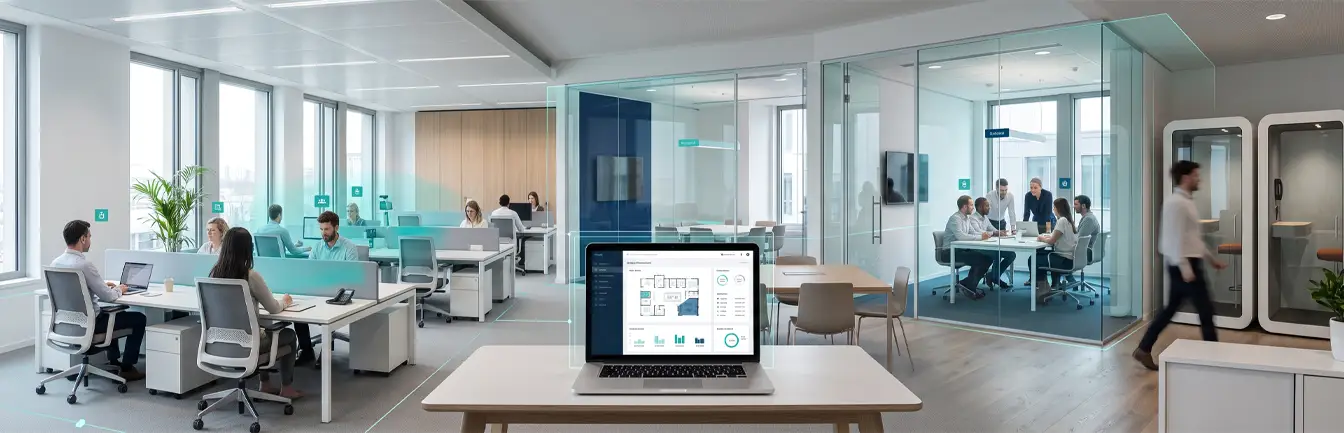
Increasingly, organizations are leveraging digital twins, interactive maps, campus maps, digital wayfinding, and connected mobility platforms to bring these dimensions together. By linking information, places, transportation options, and experiences, they can create environments that are more inclusive, easier to navigate, and more engaging for everyone.
At Vicinia, this holistic view of accessibility guides how we think about the future.
Through interactive maps, campus navigation, digital wayfinding, mobility services, transportation information, visitor engagement tools, self-guided tours, emergency preparedness capabilities, and digital twin technologies, we believe accessibility should support the entire journey, from information discovery and trip planning to navigation, engagement, and participation.
Because accessibility is ultimately about inclusion.
It is about helping people access information, choose transportation options, navigate spaces, participate fully, and reach their destinations with confidence.
And that journey belongs to everyone.