In large, complex environments, one simple question shapes the entire...
Read More
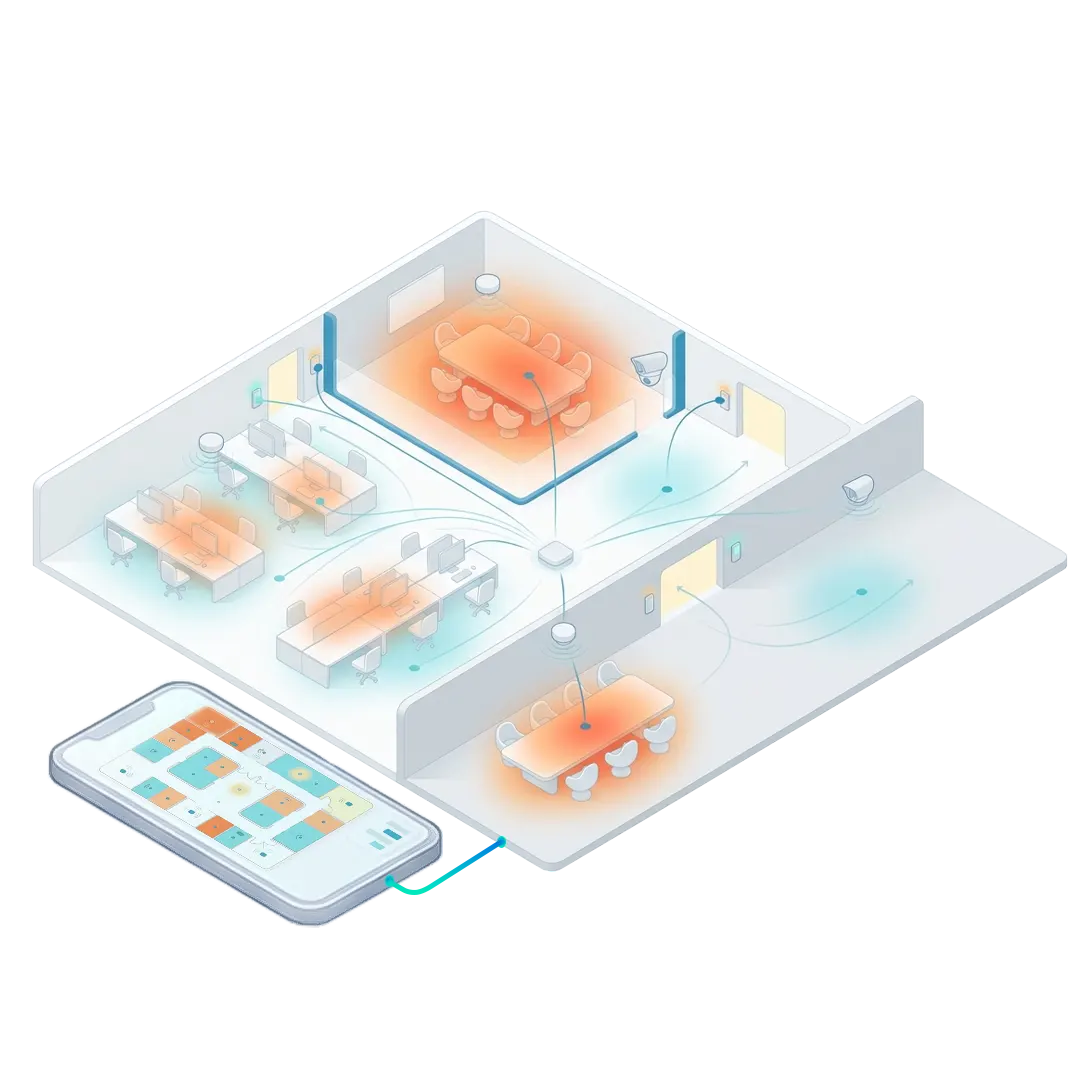
Vicinia Occupancy Intelligence is an enterprise-grade occupancy intelligence platform that delivers real-time visibility into how spaces are used across buildings, campuses, and public environments. Powered by digital twins, IoT sensing, and analytics, it converts raw occupancy activity into actionable insights that improve planning, operations, and visitor or employee experience.
Real-Time Monitoring
Track live room and zone occupancy for operational decisions
Predictive Utilization
Forecast space usage using historical patterns and visitor flows
Flow Analytics
Understand movement paths across buildings, floors, or venues
Threshold Alerts
Trigger notifications when areas exceed defined occupancy thresholds
Dwell Insights
Measure how long people stay within key areas or exhibits
Device Management
Centrally manage, monitor, and configure Vicinia IoT sensors
Digital Twin Mapping
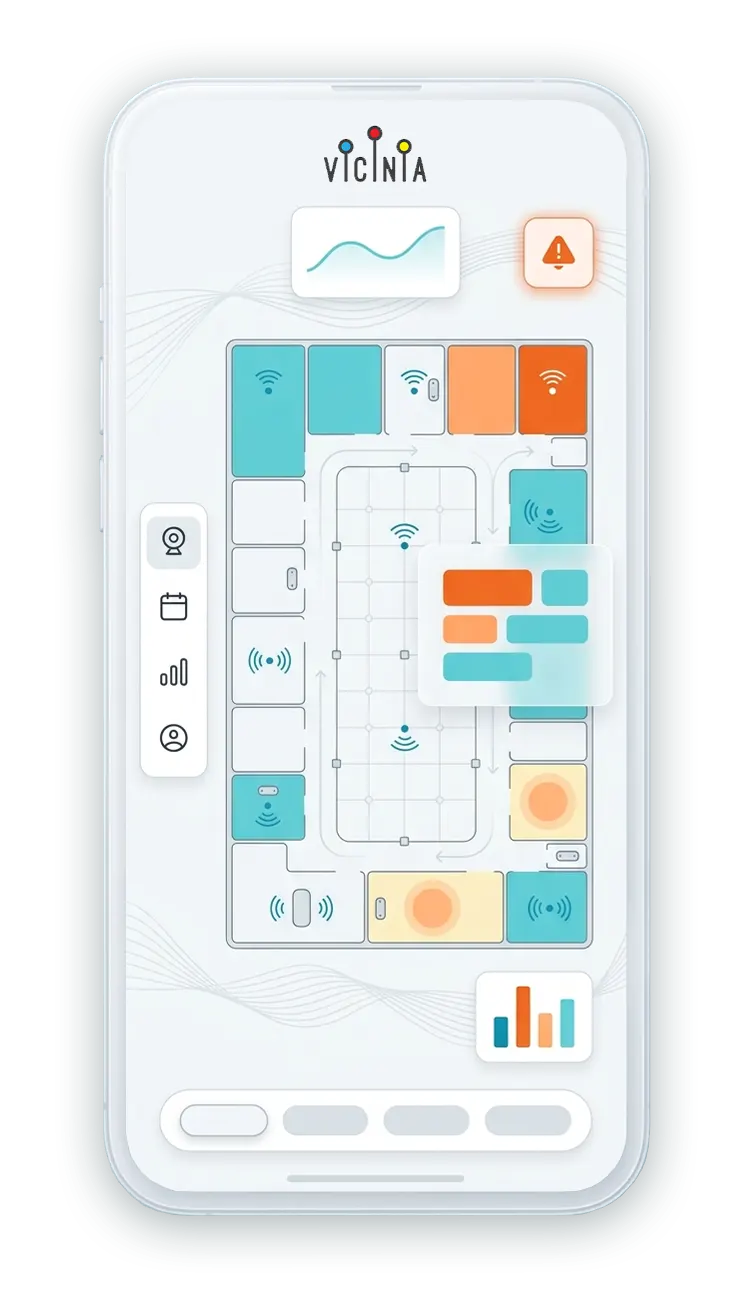
Visualize occupancy on interactive, spatially accurate floor plans
Historical Reporting
Analyze multi-year utilization trends for planning and optimization
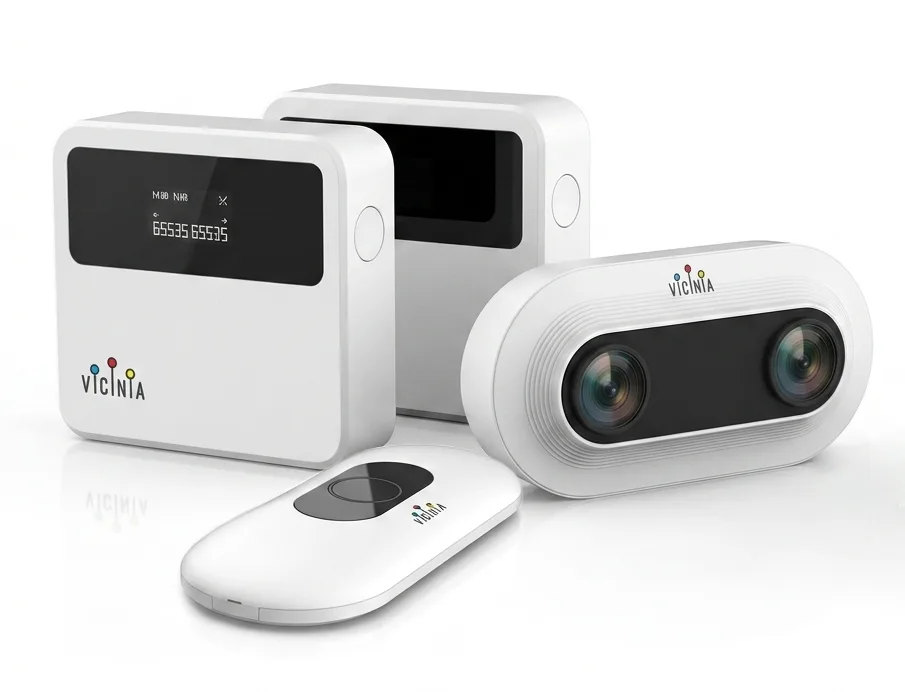
Vicinia Occupancy Intelligence integrates seamlessly with the Vicinia ecosystem of people-counting sensors, enabling precise, real-time, and privacy-safe occupancy data across diverse environments. The platform supports streamlined onboarding, monitoring, and management of Vicinia’s IoT devices, ensuring consistent data quality across entry points, galleries, workspaces, and public zones.
Gain a single, trusted source of truth across all building spaces and facilities.
Turn real-time occupancy data into faster, evidence-based operational actions.
Reduce wasted space, improve utilization, and control real estate expenses.
Connect space data with maintenance and workflow systems for coordinated execution.
Increase in accurate space-use reporting vs. manual methods
Staffing optimization efficiency from real-time occupancy patterns
Reduction in congestion across monitored zones
Improvement in facility planning using year-over-year utilization data
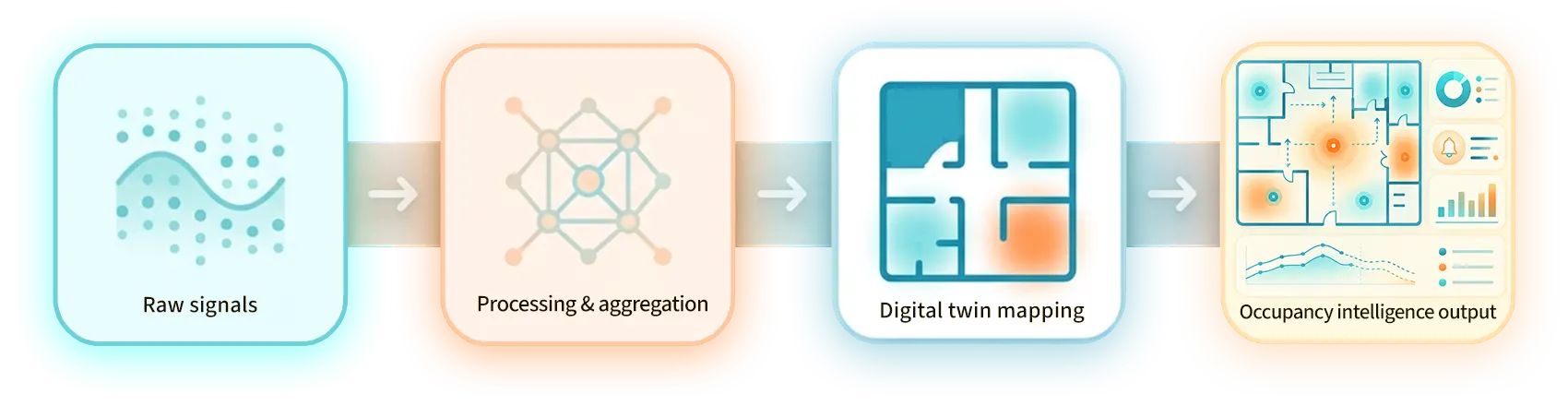
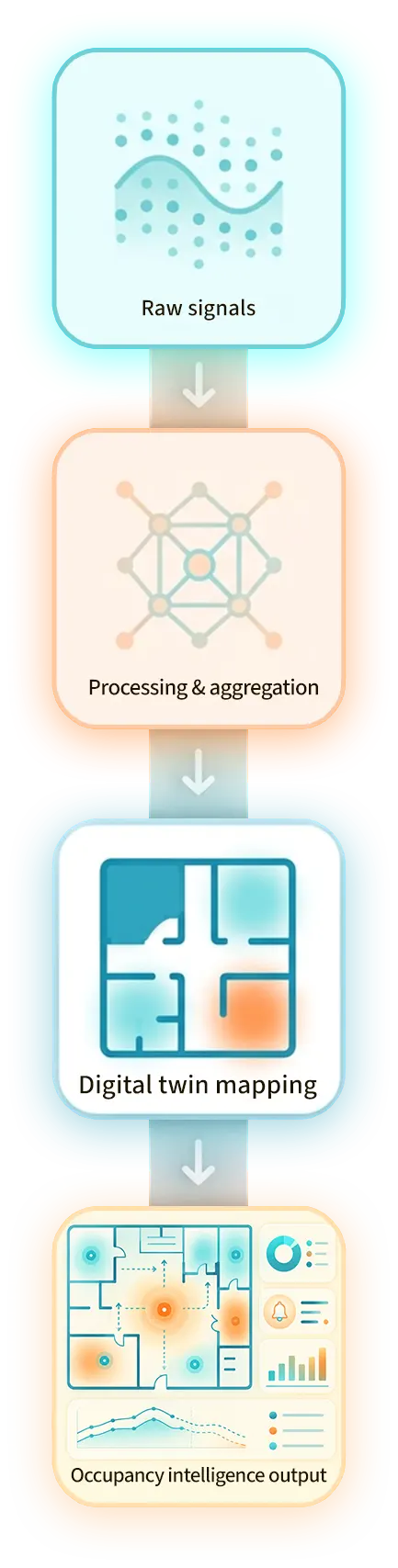
Transforms real-time device signals into mapped occupancy intelligence through Vicinia’s digital twin pipeline
“Vicinia Occupancy Intelligence gave our team precise, real-time insight into how our spaces are used, enabling smarter planning, better experiences, and more efficient operations at scale.”
Shopping Center Operations Manager
Open Architecture
Modular system supporting extensibility and integrations
Data Compatibility
Supports facility, space, IoT, and operational data formats
System Integration
Integrates with CMMS, IoT platforms, and analytics systems
Secure Deployment
Cloud-based facilities management software with enterprise security
Vicinia Occupancy Intelligence combines real‑time sensor data with a digital twin to reveal accurate usage patterns, enabling better planning, staffing, and capacity decisions across all space types.
The platform integrates with Vicinia IoT sensors to capture anonymous entry counts, flow patterns, and dwell behavior with high accuracy, even in complex or low‑light environments.
Vicinia supports its IR breakbeam, stereo‑vision, and ToF sensors, along with third‑party devices, ensuring flexible deployment across entries, open spaces, and large venues.
Vicinia devices use anonymous, non‑identifying sensor data and GDPR‑aligned processing, ensuring no personally identifiable visuals or information are captured during occupancy detection.
Yes. The platform supports open APIs, IoT standards, and enterprise integrations, allowing seamless connection with building systems, dashboards, ticketing, and planning tools.
Vicinia sensors deliver exceptional accuracy through IR, stereo‑vision, and Time‑of‑Flight technologies, outperforming manual counts and basic presence sensors—especially in high‑traffic environments.
The digital twin visualizes live occupancy, flow, and congestion across mapped zones, enabling teams to interpret utilization patterns contextually rather than through raw numbers alone.
Yes. The platform is architected for multi‑site, multi‑building environments, providing unified visibility, consistent analytics, and centralized device management across large portfolios.
Yes. Historical analytics provide year‑over‑year comparisons, peak‑time patterns, capacity trends, and utilization benchmarks to guide operational planning, budgeting, and strategic decisions.
Facilities, operations, visitor experience, safety, planning, and real‑estate teams rely on occupancy insights to improve resource allocation, eliminate bottlenecks, and optimize building performance
In large, complex environments, one simple question shapes the entire...
Read MoreFor years, space management relied on assumptions. A floor plan...

Read MoreIn today’s event landscape, experience is everything. Visitors expect more...

Read More