In large, complex environments, one simple question shapes the entire experience:
“Where am I and how can I get to where I need to go?”
Whether it’s a university campus, hospital, museum, or convention center, the ability to answer that question instantly — and accurately — defines how people feel in a space. Confusion creates friction. Clarity creates confidence.
This is where indoor positioning is changing everything.
Why Navigation Alone Is No Longer Enough
For years, navigation tools focused on directions — helping people move from point A to point B. But today’s expectations are different.
Visitors don’t just want directions. They want:
- Confidence in unfamiliar environments
Traditional maps — static, disconnected, and often hard to read — can’t meet these expectations.
Navigation is evolving into experience.
What Is Indoor Positioning (And Why It Matters)
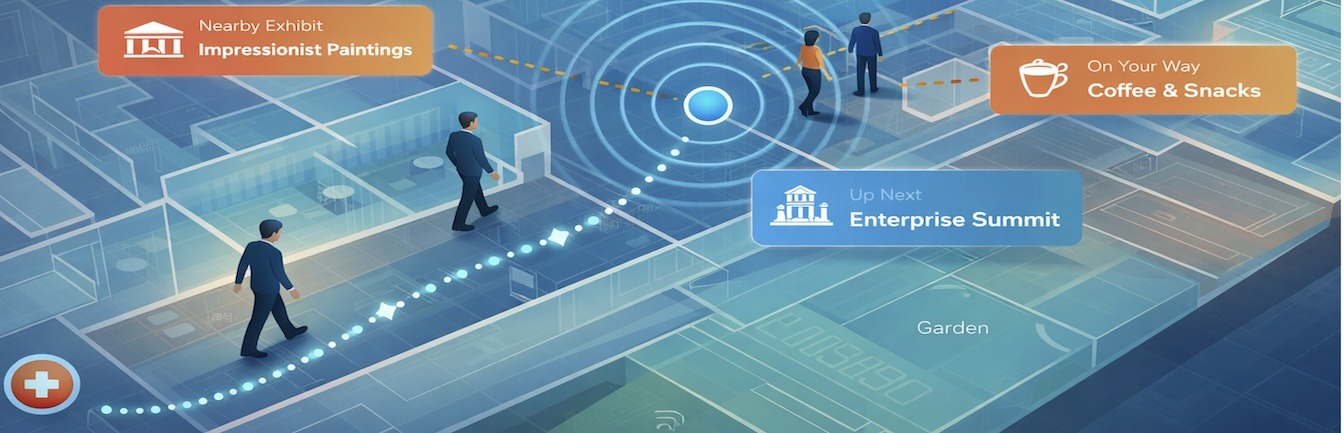
Indoor positioning allows users to see their real-time location inside a building, often represented as a “blue dot” on a digital map.
But its real value goes far beyond that visual.
With real-time indoor positioning, organizations can:
- Provide accurate, turn-by-turn navigation inside buildings
- Reduce confusion in multi-level or multi-building environments
- Improve accessibility for all users
- Enable seamless movement across indoor and outdoor spaces
In short, it brings the same level of clarity people expect from GPS — indoors.
From “Where Am I?” to “What’s Around Me?”
The real transformation happens when indoor positioning meets content.
Instead of just showing location, systems can:
- Highlight nearby services, exhibits, or amenities
- Trigger contextual information based on proximity
- Suggest routes based on user intent
- Guide visitors through curated experiences
This is where navigation becomes engagement.
The Rise of Self-Guided Tours
Self-guided tours build on indoor positioning by turning movement into a structured, meaningful journey.
Rather than relying on staff or printed materials, visitors can:
- Explore spaces at their own pace
- Access multimedia content (audio, video, text)
- Follow curated paths or themes
- Discover hidden or less obvious points of interest
For organizations, this means:
- Scalable engagement without increasing staffing
- Consistent visitor experience
- Greater control over storytelling
Self-guided tours don’t replace human interaction — they enhance it.
Real-World Applications Across Industries
🏫 Campuses
Students and visitors can navigate buildings, locate departments, and follow guided campus tours — reducing confusion and improving first impressions.
🏥 Healthcare Facilities
Patients and families can find departments quickly, reducing stress in already sensitive situations and improving operational flow.
🏛 Museums & Cultural Venues
Visitors engage with exhibits through guided narratives, increasing dwell time and content interaction.
🏢 Corporate Campuses
Employees and guests navigate large offices, find meeting rooms, and explore spaces more efficiently.
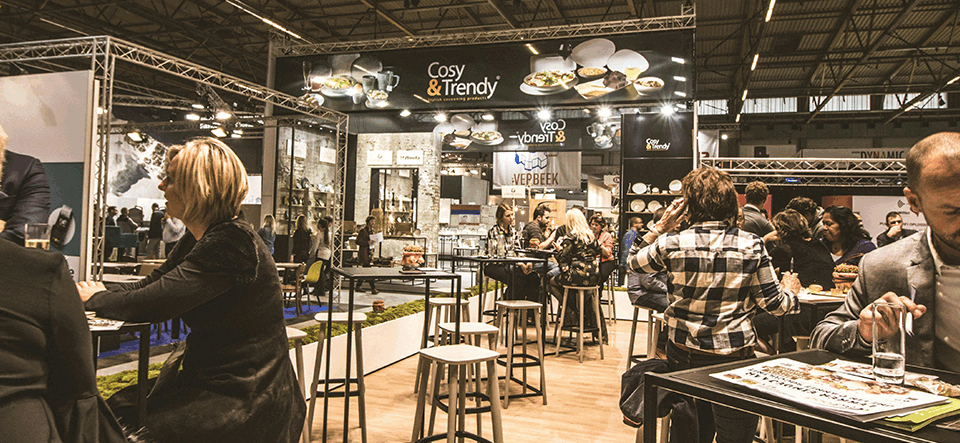
🎪 Events & Convention Centers
Attendees locate sessions, exhibitors, and amenities in real time — improving experience and maximizing engagement.
What the Data Reveals
When people move through spaces with digital guidance, organizations gain something powerful:
visibility into behavior.
Indoor positioning and self-guided tours generate insights such as:
- Movement patterns and flow
- High-traffic vs underutilized areas
- Dwell time in specific zones
- Engagement with content and locations
This data allows teams to:
- Optimize signage and routing
- Enhance event or visitor experiences
- Make informed operational decisions
How Digital Twins Bring It All Together
Indoor positioning becomes even more powerful when integrated into a digital twin.
A digital twin provides:
- A live, visual representation of the environment
- Real-time positioning layered onto physical space
- Context for understanding how people interact with environments
Instead of isolated data points, organizations see:
This transforms navigation into a connected ecosystem of insight and experience.
The Value for Organizations
When indoor positioning and self-guided tours are implemented together, organizations gain:
- Improved visitor satisfaction through intuitive navigation
- Increased engagement with spaces and content
- Reduced operational friction and fewer wayfinding questions
- Stronger accessibility and inclusivity
- Data-driven insights for continuous improvement
Most importantly, spaces become easier to understand and more enjoyable to experience.
The Future of Connected Experiences
The future of physical environments isn’t just about buildings — it’s about how people experience them.
As expectations continue to rise, organizations that invest in:
- Location-aware engagement
will create environments that feel:
Because in the end, the goal isn’t just to help people find their way.
It’s to help them feel like they belong there.